

Is HomeFi worth it? Short answer: Yes, for some rural users, HomeFi is absolutely worth it — especially if your current internet options are slow, unreliable, or frustratingly limited. But that doesn’t mean it’s perfect for everyone.
That’s where the real debate begins.
Rural internet users have heard big promises before:
- “Fast speeds”
- “Reliable coverage”
- “Easy setup”
- “Better than satellite”
Yet many people still end up dealing with buffering, dropped connections, hidden limitations, or internet that simply can’t keep up with modern streaming and remote work demands.
So naturally, many buyers are now asking a much smarter question:
Is HomeFi actually dependable rural internet… or just another overhyped solution?
Unlike traditional satellite providers, HomeFi takes a different approach by using wireless cellular technology instead of large rooftop dishes and complicated installations. That flexibility is exactly why the service has started attracting attention from rural households, RV travelers, and people simply looking for an easier alternative to older internet options.
But there’s an important catch many buyers overlook:
Wireless rural internet performance can vary significantly depending on where you live. That means one user may love the service while another struggles with weaker coverage, tower congestion, or inconsistent speeds.
In this guide, we’ll break down:
- What HomeFi actually offers
- Where it performs best
- Potential limitations rural users should understand
- And whether it’s truly worth considering before you buy
This post contains affiliate links. If you purchase through them, we may earn a small commission at no extra cost to you.
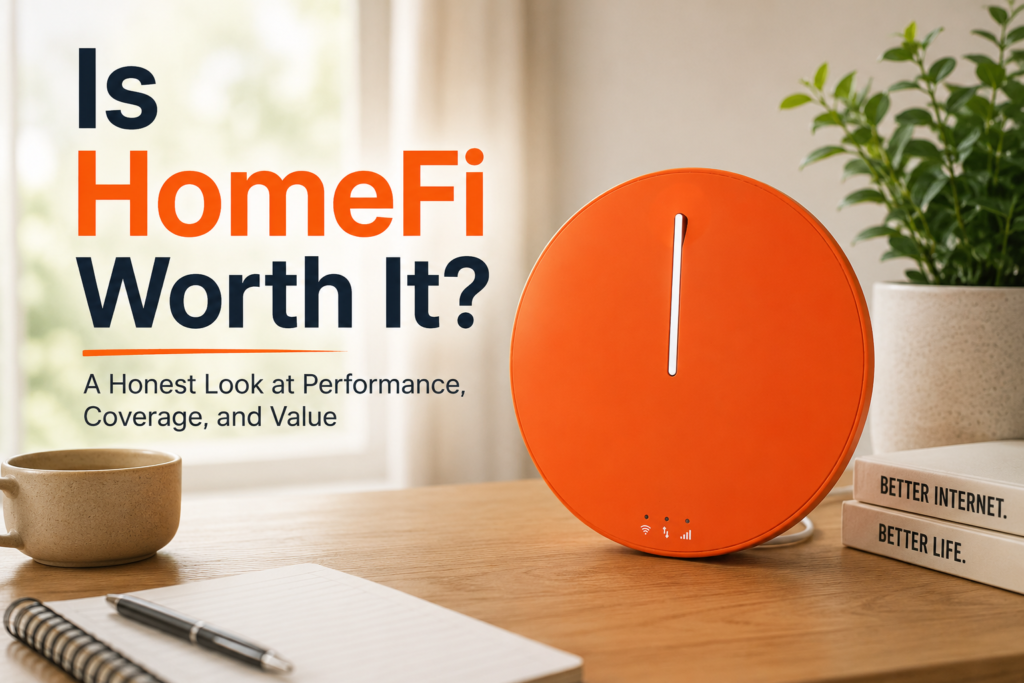
Check current plans, coverage availability, and setup details directly from HomeFi
Table of Contents
What Makes HomeFi Different From Traditional Rural Internet?
One of the biggest reasons people start looking into HomeFi is frustration.
For many rural households, internet options still feel stuck in the past:
- Slow DSL
- Expensive satellite plans
- Data limitations
- Long installation delays
- Weak reliability during bad weather
- Very few providers to choose from
That’s where HomeFi takes a different approach.
Instead of relying on traditional satellite dishes or buried cable infrastructure, the service uses wireless cellular technology to deliver internet access to rural homes and underserved areas.
For some users, that can dramatically simplify the entire experience.
The appeal is less about flashy marketing claims and more about flexibility.
With HomeFi, many buyers are attracted to:
- Simpler setup
- No large rooftop dish
- Faster startup compared to some rural providers
- Flexible service options
- Easier installation for remote areas
That flexibility is a major reason the service has started gaining attention among:
- Rural homeowners
- RV travelers
- Remote workers
- People frustrated with older satellite internet providers
However, there’s also an important reality buyers need to understand:
Wireless rural internet is highly location-dependent.
That means the exact same service can perform very differently from one area to another depending on:
- Cellular tower strength
- Network congestion
- Terrain
- Weather conditions
- Distance from coverage infrastructure
This is also why online opinions about HomeFi can seem so mixed.
Some users report major improvements over their previous rural internet options, while others experience inconsistent speeds due to weaker local coverage conditions.
In other words, whether HomeFi is “worth it” often comes down to a very simple question:
How strong is the wireless coverage where you actually live?
Where HomeFi May Be Worth It
For the right user, HomeFi may feel like a massive upgrade compared to older rural internet options.
That’s especially true for people currently dealing with:
- Slow DSL connections
- Spotty satellite internet
- Limited provider choices
- Long installation wait times
- Weak streaming performance
- Rural areas with outdated infrastructure
In those situations, flexibility alone can become a huge advantage.
One of the biggest reasons some rural users feel HomeFi is worth it comes down to simplicity:
- No complicated satellite installation
- No large rooftop equipment
- Faster setup process
- Easier relocation for RV or travel use
- More adaptable than traditional fixed rural internet systems
For remote workers and streaming households, the appeal is obvious.
People increasingly need internet capable of handling:
- Video calls
- Streaming TV
- Online schooling
- Smart home devices
- Everyday browsing across multiple devices
And for users coming from extremely limited rural internet choices, even moderate improvements in speed and reliability can feel significant.
Another reason some buyers prefer HomeFi is that it avoids some of the frustrations historically associated with satellite internet, including:
- High-latency performance
- Weather-related interruptions
- Complex installation appointments
That doesn’t mean HomeFi is perfect.
But for users with poor existing internet options, the service may absolutely be worth exploring — particularly if strong cellular coverage exists in the area.
Where HomeFi May Not Be Worth It
While HomeFi may work very well for some rural users, there are also situations where it may not be the best fit.
The biggest factor is expectations.
If someone expects ultra-fast fiber internet performance in an extremely remote area, wireless rural internet may feel disappointing regardless of the provider.
That’s because services like HomeFi still rely heavily on local cellular network conditions.
In weaker coverage areas, users may experience:
- Slower speeds
- Inconsistent streaming quality
- Congestion during busy hours
- Reduced reliability depending on location
This is especially important for:
- Competitive online gamers
- Large households with heavy simultaneous streaming
- Users uploading massive files regularly
- Homes with weak nearby tower coverage
In those situations, performance limitations may become more noticeable.
Another reality buyers should understand is that rural wireless internet is rarely identical from one location to another.
A service that performs extremely well for one customer may struggle in another area simply because:
- Tower congestion differs
- Terrain changes signal quality
- Coverage strength varies
- Local infrastructure is different
That inconsistency is one reason online opinions about HomeFi can sometimes appear divided. For users already living in areas with strong fiber or cable internet options, switching to wireless rural internet may not make much sense at all.
However, for people with very limited rural choices, the equation can look very different. Ultimately, whether HomeFi is worth it often depends less on hype — and more on the quality of coverage where you actually plan to use it.
Looking for a deeper breakdown of setup, performance, portability, and real-world usability?
Check out our full HomeFi Internet Review for a closer look at how HomeFi compares to traditional rural internet options.
One of the Biggest Advantages: Portability
For some users, the biggest selling point of HomeFi has nothing to do with raw speed.
It’s freedom.
Traditional rural internet often feels tied down by:
- Permanent installations
- Technician appointments
- Satellite dish positioning
- Long setup processes
- Fixed-location limitations
HomeFi offers a much more flexible approach.
Because the service relies on wireless cellular connectivity rather than buried cable lines or mounted satellite equipment, many users are drawn to the portability and simplicity of the system.
That flexibility may be especially appealing for:
- RV travelers
- Seasonal campers
- Rural property owners
- Remote workers
- People living in temporary housing
- Users who relocate frequently
Instead of dealing with complicated infrastructure every time you move, wireless internet can create a much more adaptable setup experience.
For RV users in particular, this can become a major advantage.
Many travelers simply want reliable enough internet for:
- Streaming
- Browsing
- Video calls
- Navigation
- Remote work while traveling
And compared to older rural internet systems, portability can make HomeFi feel far more practical for modern lifestyles.
Of course, coverage still matters.
The overall experience will always depend heavily on signal strength and local network conditions wherever the device is being used.
But for users prioritizing flexibility and mobility, portability may be one of the strongest reasons HomeFi stands out from traditional rural internet options.

So… Is HomeFi Actually Overhyped?
Not necessarily — but expectations matter.
A lot of the “overhyped” discussion surrounding rural internet comes from years of frustration within the industry itself.
Many rural users have already experienced:
- Underperforming satellite internet
- Weak DSL connections
- Coverage promises that didn’t match reality
- Internet plans that sounded better on paper than they felt in everyday use
Because of that history, skepticism is completely understandable.
The difference with HomeFi is that the company isn’t trying to position itself as luxury fiber internet for major cities.
Instead, the service appears focused on something much more practical:
- Flexible setup
- Rural accessibility
- Easier installation
- Wireless portability
- Alternative internet options for underserved areas
For many rural households, that alone may feel like a meaningful improvement.
At the same time, it’s important to stay realistic.
No wireless rural internet provider can magically overcome:
- Weak cellular infrastructure
- Heavy tower congestion
- Extremely remote terrain limitations
That’s why some users report excellent experiences while others remain underwhelmed.
In many ways, the real value of HomeFi depends on what you’re comparing it against.
For someone already enjoying high-end fiber internet, the service may not feel impressive.
But for users struggling with older rural internet options, difficult satellite installations, or unreliable DSL connections, HomeFi may absolutely feel worth considering.
And honestly, that’s probably the most realistic way to view the service:
not as a miracle solution for everyone — but as a potentially strong fit for the right rural user.
Still unsure whether HomeFi is trustworthy?
Our dedicated Is HomeFi Legit? guide breaks down scam concerns, user expectations, contract flexibility, and what rural buyers should know before signing up.
One Major Advantage: No Long-Term Contracts
One of the biggest reasons some rural users feel more comfortable trying HomeFi is the flexibility.
Historically, rural internet customers have often been trapped in frustrating situations involving:
- Long-term service agreements
- Expensive cancellation penalties
- Installation commitments
- Contracts tied to underperforming internet service
That experience has made many buyers understandably cautious.
HomeFi takes a much more flexible approach.
The ability to avoid long-term contracts and cancel anytime can remove a lot of pressure from the decision-making process — especially for users unsure how wireless coverage will perform in their exact location.
And honestly, that matters more than many people realize.
Because rural wireless internet performance can vary by area, flexibility becomes a major advantage.
Instead of feeling locked into a multi-year agreement, users have more freedom to evaluate whether the service actually fits their needs.
That flexibility may be especially appealing for:
- RV travelers
- Temporary housing situations
- Rural users testing alternatives to satellite internet
- Households uncertain about local signal strength
- People frustrated with restrictive traditional providers
For many buyers, the “cancel anytime” structure creates something important that rural internet customers often don’t feel:
Less risk.
And in a category where many people have already experienced disappointing internet service in the past, reducing that risk can make HomeFi feel far more approachable than traditional contract-heavy providers.
Pros and Cons of HomeFi
Pros
- No long-term contracts
The ability to cancel anytime gives users more flexibility and less risk compared to many traditional rural internet providers. - No satellite dish installation
HomeFi uses wireless cellular technology instead of complicated rooftop satellite equipment. - Simple setup process
Many users are attracted to the easier plug-and-play setup compared to older rural internet systems. - Portable and travel-friendly
The flexibility of wireless internet may appeal to RV travelers, remote workers, and users who relocate frequently. - Potential alternative to slow rural internet options
For users stuck with weak DSL or frustrating satellite internet, HomeFi may feel like a meaningful upgrade. - Designed with rural users in mind
The service specifically targets underserved areas where internet choices are often limited. - Less intimidating than traditional rural installations
Many users prefer avoiding technician scheduling, rooftop equipment, and complicated infrastructure setups.
Cons
- Performance depends heavily on local coverage
Wireless rural internet quality can vary dramatically depending on tower strength, terrain, and congestion. - Not identical to fiber internet
Users expecting ultra-fast city-level fiber speeds may end up disappointed. - Congestion can impact speeds
Like many wireless services, performance may fluctuate during busy network usage periods. - Mixed online reviews can create confusion
Because experiences vary by location, user feedback online can appear inconsistent. - May not fit extreme high-demand households
Heavy gamers, large streaming households, or users uploading massive files daily may encounter limitations in weaker coverage areas. - Coverage quality matters more than marketing claims
Even the best rural wireless provider will struggle in areas with poor underlying cellular infrastructure.
Trying to decide between wireless rural internet and satellite internet?
Our HomeFi vs Starlink comparison explores the biggest differences in portability, setup, flexibility, coverage, and everyday rural internet use.
Current HomeFi Discount Offer
HomeFi currently offers a 10% discount for new customers, which should automatically apply during checkout through the official website. For rural users comparing internet options, that discount may help reduce the upfront cost of trying the service — especially when combined with the company’s no-contract, cancel-anytime flexibility.
For users still deciding whether HomeFi is actually worth it, lowering the initial cost can make trying the service feel much less risky.
Check current HomeFi plans, coverage options, and available savings directly from the official website
Frequently Asked Questions About HomeFi
Is HomeFi actually worth it?
For many rural users, it may be — especially if current internet options are slow, unreliable, or extremely limited. The biggest factors are local coverage quality and what you’re comparing it against.
Does HomeFi use satellite internet?
No. HomeFi uses wireless cellular technology rather than traditional satellite dishes and rooftop equipment.
Can you cancel HomeFi anytime?
One of the major advantages is flexibility. HomeFi promotes contract-free service, which may feel much less restrictive than traditional rural internet providers.
Is HomeFi good for RV travel?
For some users, portability is one of the biggest selling points. Wireless internet flexibility may work well for RV travelers, campers, and people needing internet access across multiple locations.
Can HomeFi replace satellite internet?
In some situations, yes. Many users explore HomeFi specifically because they want an easier alternative to older satellite internet systems.
Does HomeFi work for streaming?
In strong coverage areas, many users should be able to stream video content normally. However, streaming quality can still depend heavily on local signal strength and network congestion.
Is HomeFi good for gaming?
Casual gaming may work fine in areas with strong coverage. Competitive online gaming that requires extremely low latency may still perform better on fiber or high-end wired internet connections.
Does weather affect HomeFi?
Wireless internet performance can sometimes fluctuate depending on weather conditions, signal quality, and local infrastructure. Even so, many users still prefer it over traditional satellite installations.
Why are online reviews of HomeFi mixed?
Because rural wireless internet performance is highly location-dependent. Some users experience strong speeds and reliability, while others may struggle in weaker coverage areas.
Who may benefit most from HomeFi?
The service may be especially appealing for rural households, RV travelers, and remote workers. It may also fit users frustrated with satellite internet or people wanting flexible, contract-free internet options.
ReviewMerit Verdict

HomeFi may absolutely be worth it for the right rural user — especially for people frustrated with limited internet options, difficult satellite installations, or restrictive long-term contracts.
The biggest strength of HomeFi is flexibility.
Instead of relying on traditional satellite systems and complicated infrastructure, the service focuses on:
- Simpler setup
- Wireless portability
- Rural accessibility
- Contract-free flexibility
- Easier installation for underserved areas
For many users, that alone may feel like a major upgrade compared to older rural internet solutions.
At the same time, expectations still matter.
Because HomeFi depends heavily on local wireless coverage, real-world performance can vary significantly depending on where you live and how strong nearby network infrastructure is in your area.
For users with strong coverage and limited alternatives, HomeFi may be a very practical rural internet solution.
For users expecting premium fiber-level performance in extremely remote areas, the experience may feel less impressive.
Best For:
- Rural households
- RV travelers
- Flexible internet needs
- Users seeking alternatives to satellite internet
- Remote workers in underserved areas
Not Ideal For:
- Fiber internet expectations
- Weak cellular coverage locations
- Competitive gaming requiring ultra-low latency
- Extremely heavy multi-user households
Where to Try HomeFi
If you want to see whether HomeFi may fit your area or internet needs, the best option is to explore the service directly through the official website.
Because rural wireless internet performance can vary significantly depending on coverage conditions, checking local availability is one of the most important steps before making any decision.
Many users are drawn to HomeFi because of the:
- Flexible setup
- No-contract structure
- Portability
- Simpler alternative to traditional satellite internet
Before signing up, we recommend reviewing:
- Coverage availability
- Current plan options
- Device information
- Setup details
- Internet needs for your household or travel situation
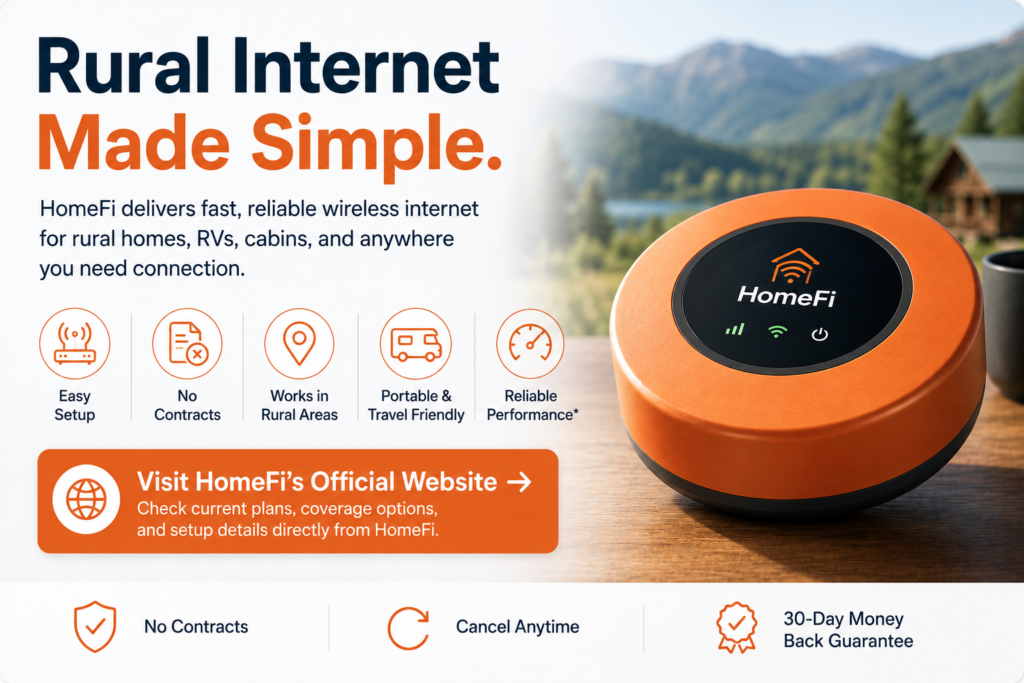
Check current plans, coverage options, and setup details directly from HomeFi
Final Thoughts
HomeFi may not be perfect for everyone — but for many rural users, it could absolutely be worth considering.
The biggest appeal isn’t flashy marketing or unrealistic promises.
It’s the flexibility.
For people frustrated with:
- Limited rural internet choices
- Complicated satellite installations
- Long-term contracts
- Weak DSL performance
- Internet that can’t keep up with modern streaming and remote work needs
…the simplicity of HomeFi may feel like a refreshing alternative.
At the same time, it’s important to stay realistic.
Because the service depends heavily on wireless coverage, your experience will always be influenced by:
- Local signal quality
- Tower congestion
- Terrain
- Coverage strength in your area
That’s why some users love the service while others feel underwhelmed.
In our opinion, the real question isn’t whether HomeFi is “overhyped.”
It’s whether it solves your rural internet problem better than the alternatives currently available to you.
And for many rural households, RV travelers, and underserved areas, the answer may very well be yes.
Thanks for reading, we look forward to your visit at ReviewMerit.com – Your Go-To Authority for Trusted Product Reviews