
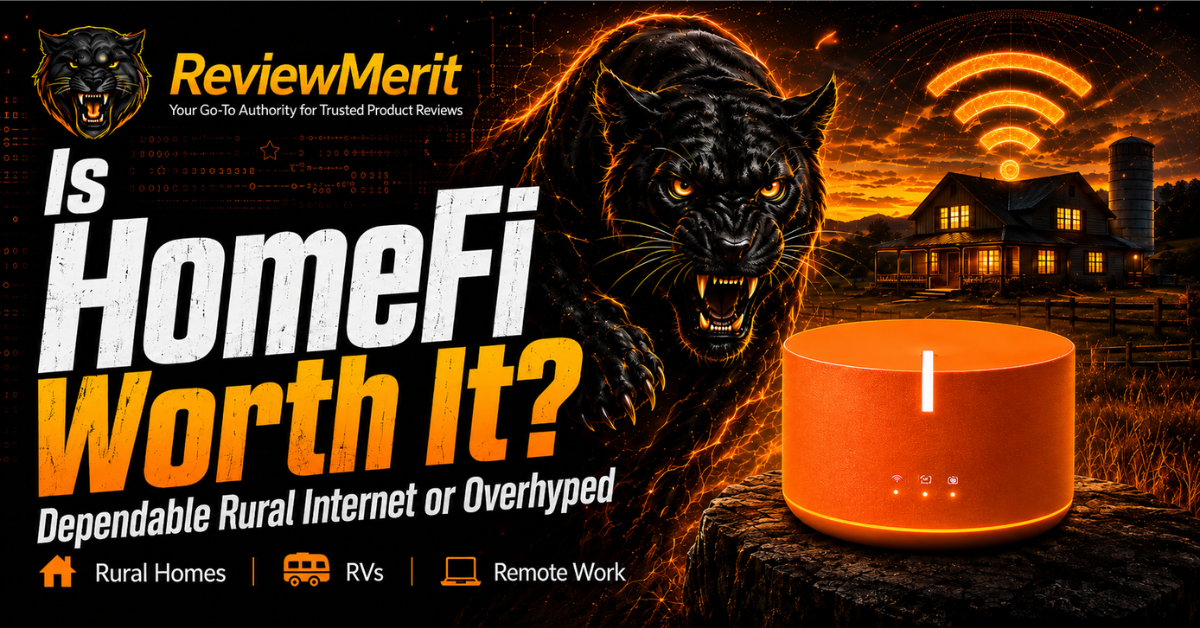
Is HomeFi worth it? Yes, for the right rural user, it absolutely is. If your current internet options are slow, unreliable, expensive, or simply limited by where you live, HomeFi offers an appealing alternative. It combines wireless cellular connectivity with a simple setup and the kind of portability that traditional satellite and wired services usually can’t provide.
That doesn’t mean HomeFi is the right choice for everyone. Rural internet is highly dependent on location, and the quality of your experience can change dramatically depending on cellular coverage, nearby towers, congestion, and terrain. Someone with strong service in their area may find HomeFi dependable enough for streaming, remote work, and everyday browsing, while another user a few miles away may see very different results.
That location factor is really where the question of value begins.
Rural internet customers have heard plenty of promises over the years — faster speeds, better coverage, easy installation, and alternatives to satellite. Unfortunately, those promises don’t always translate into a better real-world experience. Buffering, dropped connections, limited provider choices, and unreliable service remain common frustrations in many rural areas.
HomeFi approaches the problem differently by using wireless cellular networks rather than a traditional satellite dish or buried cable connection. For rural households, RV travelers, and remote workers, that flexibility is one of its biggest advantages. There is no complicated rooftop installation, and the service can be much easier to set up and use in places where conventional internet options are limited.
The real question, then, isn’t whether HomeFi is universally good or bad. It’s whether HomeFi offers enough reliability, flexibility, and value to make sense where you live and compared with the internet options you already have.
That’s what we’re going to determine in this guide.
This post contains affiliate links. If you purchase through them, we may earn a small commission at no extra cost to you.
See current plans & coverage on the official website
Table of Contents
What Makes HomeFi Different From Traditional Rural Internet?
One of the biggest reasons people start looking into HomeFi is frustration. For many rural households, internet choices can still feel stuck in the past. Slow DSL, expensive satellite plans, data limitations, long installation delays, and unreliable service can leave people feeling like they have very few good options.
HomeFi approaches that problem differently. Instead of relying on a satellite dish or buried cable infrastructure, it uses wireless cellular technology to deliver internet service. That eliminates some of the equipment and installation headaches associated with more traditional rural internet providers and gives HomeFi a level of flexibility that is especially attractive in areas where choices are limited.
There’s no large rooftop dish to install, setup is relatively straightforward, and the service is portable enough to appeal not only to rural homeowners but also to RV travelers and remote workers. For someone coming from an older satellite system or painfully slow DSL, that simplicity alone can make HomeFi feel like a significant improvement.
But there is an important tradeoff, and it’s one of the most important things to understand before signing up.
HomeFi’s performance depends heavily on the wireless coverage available where you actually plan to use it.
Cellular tower strength, network congestion, terrain, and your distance from available infrastructure can all affect the experience. That means two HomeFi customers can have very different opinions of the exact same service. Someone with strong local coverage may see a major improvement over their previous rural internet, while another person in a weaker coverage area may experience slower or less consistent performance.
Where HomeFi May Be Worth It
For the right user, HomeFi may feel like a major upgrade over older rural internet options, especially if the alternatives are slow DSL, unreliable satellite service, limited provider choices, or long installation delays.
The biggest advantage is often simplicity. HomeFi doesn’t require a large rooftop dish or complicated installation, and the setup is much easier to manage than many traditional rural internet systems. That flexibility also makes it appealing for RV travelers, remote workers, and people who need internet service in locations where wired options are limited or unavailable.
For households that rely on the internet for streaming, video calls, online schooling, smart home devices, and everyday browsing, even a moderate improvement in speed and reliability can make a noticeable difference. That is especially true in rural areas where people may already be used to working around weak connections and outdated infrastructure.
HomeFi may also appeal to users who want to avoid some of the frustrations commonly associated with satellite internet, including higher latency, weather-related interruptions, and more complicated installation requirements.
None of that means HomeFi is perfect. Its value still depends heavily on the strength of the wireless coverage in your area. But for users with limited internet options and solid cellular coverage, HomeFi is absolutely worth considering.
Where HomeFi May Not Be Worth It
HomeFi may work very well for some rural users, but there are also situations where it simply may not be the best fit.
The biggest issue is expectations. If you’re hoping for fiber-like speeds in a very remote area, wireless rural internet can still feel limiting regardless of the provider. HomeFi depends heavily on local cellular conditions, so weaker coverage, tower congestion, and terrain can all affect the experience.
That can mean slower speeds, inconsistent streaming quality, or reduced reliability during busy periods. Those limitations may be more noticeable for competitive gamers, large households streaming on multiple devices at once, users who regularly upload very large files, or anyone living in an area with weak nearby tower coverage.
Location also plays a major role. A service that performs extremely well for one customer may behave very differently just a few miles away because tower strength, congestion, terrain, and local infrastructure are never exactly the same from one area to another.
That variation helps explain why opinions about HomeFi can be so divided. For someone who already has reliable cable or fiber internet, switching to wireless rural internet may not make much sense at all. But for people with very limited rural choices, the equation can look completely different.
Ultimately, whether HomeFi is worth it depends less on the marketing and more on the quality of coverage where you actually plan to use it.
Looking for a deeper breakdown of setup, performance, portability, and real-world usability?
Check out our full HomeFi Internet Review for a closer look at how HomeFi compares to traditional rural internet options.
One of the Biggest Advantages: Portability
For some users, one of HomeFi’s biggest advantages has very little to do with raw speed. It’s the freedom to use the service without being tied to a permanent installation.
Traditional rural internet often comes with fixed equipment, technician appointments, satellite dish placement, or long setup processes. HomeFi takes a more flexible approach by using wireless cellular connectivity instead of buried cable lines or mounted satellite equipment.
That makes it especially appealing for RV travelers, seasonal campers, rural property owners, remote workers, people in temporary housing, and anyone who relocates frequently. Instead of rebuilding your internet setup every time your location changes, HomeFi offers a much more adaptable way to stay connected.
For RV users in particular, that portability can be a major advantage. Many travelers simply want dependable internet for streaming, browsing, video calls, navigation, and remote work without being tied to a single address or complicated installation.
Compared with older rural internet systems, that flexibility can make HomeFi feel much more practical for modern lifestyles.
Coverage still matters, of course. Your experience will always depend on signal strength and local network conditions wherever the device is being used. But for users who value mobility and flexibility, portability is one of the strongest reasons HomeFi stands out.
So… Is HomeFi Actually Overhyped?
Not necessarily, but expectations matter.
A lot of the skepticism around rural internet comes from years of disappointment. Many users have already dealt with underperforming satellite service, weak DSL connections, coverage promises that didn’t match reality, and internet plans that sounded much better on paper than they performed in everyday use.
HomeFi takes a more practical approach. Instead of trying to compete with high-end fiber service in major cities, it focuses on flexibility, simpler setup, portability, and providing another option for rural and underserved areas.
For many rural households, that alone can make HomeFi feel like a meaningful improvement.
At the same time, no wireless rural internet provider can completely overcome weak cellular infrastructure, heavy tower congestion, or extremely remote terrain. That is why one user may have an excellent experience while another comes away disappointed.
In many ways, the real value of HomeFi depends on what you are comparing it against. Someone who already has reliable fiber or cable internet may not see much reason to switch. But for users dealing with older rural internet options, difficult satellite installations, or unreliable DSL service, HomeFi may feel like a much better fit.
That is probably the fairest way to look at it. HomeFi is not a miracle solution for everyone, but it can be a very practical choice for the right rural user.
Still unsure whether HomeFi is trustworthy?
Our dedicated Is HomeFi Legit? guide breaks down scam concerns, user expectations, contract flexibility, and what rural buyers should know before signing up.
One Major Advantage: No Long-Term Contracts
One of HomeFi’s biggest advantages is the freedom to try the service without committing to a long-term contract.
That matters in rural areas, where internet performance can vary so much from one location to another. Signing a multi-year agreement for a service that may not perform well at your address can feel like a gamble, especially for people who have already dealt with disappointing satellite or DSL providers.
HomeFi’s cancel-anytime structure removes much of that pressure. Instead of feeling locked in, users have more freedom to see how the service performs in their own location and decide whether it truly fits their needs.
That flexibility is especially appealing for RV travelers, people in temporary housing, rural households testing alternatives to satellite internet, and anyone unsure about local signal strength.
For many buyers, the real advantage is simple: less risk.
In a category where internet service can look very different from one area to another, avoiding a long-term commitment makes HomeFi much easier to consider.
Pros and Cons of HomeFi
Pros
- No long-term contracts
HomeFi’s cancel-anytime structure gives users more flexibility and reduces the risk of being stuck with a service that may not perform well in their location. - No satellite dish installation
HomeFi uses wireless cellular technology, so there is no need for large rooftop equipment or complicated satellite installation. - Simple setup
The service is designed to be easier to get up and running than many traditional rural internet systems. - Portable and travel-friendly
HomeFi may be especially appealing for RV travelers, remote workers, and users who need internet in more than one location. - A strong alternative to limited rural options
For households dealing with slow DSL, frustrating satellite service, or very few local providers, HomeFi may offer a much more practical solution. - Built for rural and underserved areas
HomeFi focuses on users who often have fewer internet choices than households in more populated areas.
Cons
- Performance depends heavily on local coverage
Signal strength, tower congestion, terrain, and local infrastructure can all affect the quality of the connection. - It does not replace fiber in every situation
Users who already have fast, reliable cable or fiber internet may see little reason to switch. - Speeds can vary
Like other wireless services, performance may fluctuate depending on network conditions and time of day. - Experiences can differ significantly by location
One user may have excellent results while another sees inconsistent performance simply because their local coverage is different. - It may not be ideal for extremely demanding households
Competitive gaming, heavy simultaneous streaming, or frequent large uploads may be more challenging in weaker coverage areas.
Trying to decide between wireless rural internet and satellite internet?
Our HomeFi vs Starlink comparison explores the biggest differences in portability, setup, flexibility, coverage, and everyday rural internet use.
Check current coverage and plan options on the official website
Frequently Asked Questions About HomeFi
Is HomeFi actually worth it?
Yes, for the right rural user, it absolutely is. HomeFi makes the most sense for people dealing with slow DSL, unreliable satellite internet, or very limited provider choices. The biggest factor is whether you have strong enough cellular coverage where you plan to use it.
Does HomeFi use satellite internet?
No. HomeFi uses wireless cellular technology instead of traditional satellite dishes and rooftop equipment.
Can you cancel HomeFi anytime?
Yes. HomeFi offers contract-free service with the ability to cancel anytime, which gives users more flexibility if the service does not fit their needs.
Is HomeFi good for RV travel?
Yes, portability is one of HomeFi’s strongest advantages. It may be a good fit for RV travelers, campers, and remote workers who need internet access in more than one location, provided adequate cellular coverage is available.
Can HomeFi replace satellite internet?
For many rural users, yes. HomeFi may be a practical alternative for people who want to avoid satellite dishes, installation appointments, and some of the limitations associated with traditional satellite service.
Does HomeFi work for streaming?
Yes, in areas with strong coverage. Streaming performance still depends on local signal strength, tower congestion, and overall network conditions.
Is HomeFi good for gaming?
It can be suitable for casual gaming when coverage is strong. Competitive gaming that depends on consistently low latency may still be better suited to reliable cable or fiber internet.
Does weather affect HomeFi?
HomeFi is not dependent on a satellite dish, but wireless performance can still be influenced by local signal conditions, terrain, congestion, and other environmental factors.
Why are online reviews of HomeFi mixed?
Because HomeFi performance is highly location-dependent. A customer with strong nearby cellular coverage may have a very different experience from someone using the service in a weaker coverage area.
Who may benefit most from HomeFi?
HomeFi is best suited to rural households, RV travelers, remote workers, and users with limited traditional internet options. It is especially appealing for people looking for a portable, contract-free alternative to satellite or slow DSL service.
ReviewMerit Verdict

HomeFi is worth it for the right rural user, especially for people dealing with limited internet options, unreliable satellite service, or restrictive long-term contracts.
Its biggest strength is flexibility. HomeFi offers a simpler setup, wireless portability, contract-free service, and an easier alternative for rural households that may not have access to dependable cable or fiber internet. That does not mean performance will be the same everywhere. HomeFi still depends heavily on local wireless coverage, so signal strength, tower congestion, terrain, and nearby network infrastructure can all affect the experience.
For users with strong coverage and limited alternatives, HomeFi is a practical and appealing rural internet option. For someone who already has reliable cable or fiber service, or lives in an area with weak cellular coverage, the value is much harder to justify.
Best For:
- Rural households with limited internet choices
- RV travelers
- Remote workers
- Users looking for an alternative to satellite internet
- Anyone who values portability and contract-free flexibility
Not Ideal For:
- Homes with reliable fiber or cable internet
- Areas with weak cellular coverage
- Competitive gaming that requires consistently low latency
- Extremely heavy multi-user households with demanding bandwidth needs
Where to Try HomeFi
If HomeFi sounds like a good fit for your needs, the next step is to check the current plans and coverage options directly through the official website. Because HomeFi relies on wireless cellular coverage, availability and performance can vary by location. Before signing up, it’s worth confirming that the service is available where you plan to use it and reviewing the current plan details.
We also recommend looking closely at the device, setup requirements, and how you expect to use the service. A rural household relying on HomeFi for everyday streaming and browsing may have different needs than an RV traveler or remote worker who values portability. For the right user, HomeFi’s combination of flexible setup, no long-term contract, and portability make it a practical alternative to traditional satellite internet.

Ready to See If HomeFi Fits Your Needs?
See current plans & coverage on the official website
Explore More Rural Internet Guides
Still comparing your options? Visit our Rural Internet & Connectivity Guides for more reviews, comparisons, and buying guides covering HomeFi, satellite alternatives, and other rural internet solutions.