
Finding the best internet for rural areas is not as simple as choosing the provider with the fastest advertised speed. In remote locations, the better question is which type of connection actually reaches your property and fits the way you use the internet. A rural household with strong cellular coverage may have a completely different best option than someone living far from the nearest tower or wired network.
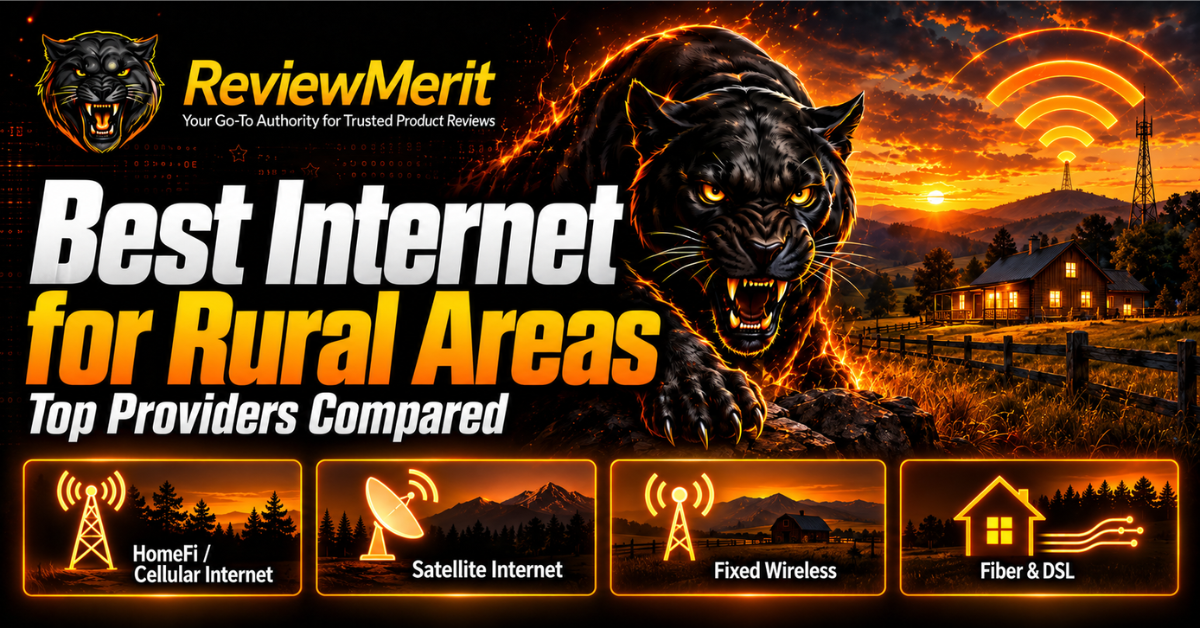
Today, rural users can choose from cellular internet, satellite service, fixed wireless, DSL, cable, and expanding fiber networks. Each option has strengths and limitations, and the best choice often depends on coverage, reliability, portability, equipment, and cost rather than speed alone. That is why comparing the different technologies side by side matters more than simply picking the biggest name.
In this guide, we compare the best internet for rural areas by situation, including which options make the most sense for rural homes, RV travelers, remote workers, and extremely isolated locations. We will also show where HomeFi fits among the top rural internet choices and when satellite, fixed wireless, or fiber may be the better decision.
This post contains affiliate links. If you purchase through them, we may earn a small commission at no extra cost to you.
Check coverage, pricing, and available HomeFi internet plans.
Table of Contents
Best Internet for Rural Areas: Quick Answer
There is no single internet provider that is automatically the best choice for every rural household. The strongest option depends on what actually reaches your location, how reliable that connection is, and what you need it to do. In some areas, cellular internet may offer the best mix of flexibility and convenience. In others, satellite may be the only practical choice, while fixed wireless or fiber can be the better answer when local infrastructure is strong.
For many users, the decision comes down to a few basic questions: Do you need a connection that can move with you? Is your cellular signal strong enough to support everyday use? Are you living in an extremely remote area? Does a local fixed wireless provider serve your property? Has fiber finally reached your address? Once those questions are answered, the best rural internet option usually becomes much easier to identify.
Best Overall Wireless Option: HomeFi
For rural users with good cellular coverage, HomeFi is one of the more practical wireless options we have looked at. It uses cellular connectivity rather than a satellite dish or permanent wired connection, which means setup is simpler and the equipment is much easier to use in locations where traditional internet providers may not be available.
The biggest strength is flexibility. HomeFi can make sense for rural homes, cabins, RVs, remote workers, travelers, and people who split time between multiple locations. That portability gives it an advantage over many fixed internet services, especially for users who do not want to be tied to one address.
HomeFi is not the right answer everywhere, though. Its performance still depends on local cellular coverage, tower distance, congestion, and terrain. In areas with a strong signal, that can work very well. In extremely isolated locations with weak cellular service, another type of connection may be the better choice.
For a deeper look at the service, see our HomeFi Internet Guide and HomeFi Internet Review.
Best for Extremely Remote Areas: Satellite Internet
Satellite internet remains one of the strongest choices for people who live far beyond the reach of reliable cellular, cable, fiber, or fixed wireless service. Because the connection comes from satellites rather than nearby towers or buried infrastructure, providers such as Starlink, HughesNet, and Viasat can reach locations where other options simply cannot.
That wider reach is the biggest advantage. Someone living on a remote farm, mountain property, or isolated piece of land may have little or no cellular coverage, but satellite can still provide internet as long as the equipment has a suitable view of the sky.
The tradeoff is that satellite service usually involves more equipment, higher upfront costs, and less portability than cellular internet. Weather, latency, congestion, and provider-specific data policies can also affect performance. Even with those limitations, satellite remains an important part of the rural internet market because it can reach places where other services do not.
If you are comparing satellite with wireless service, our HomeFi vs Starlink comparison and Best Alternatives to Satellite Internet guide go deeper into the differences.
Best If Available: Fiber Internet
If dependable fiber internet reaches your rural address at a competitive price, it should usually be one of the first options you consider. Fiber offers high speeds, low latency, and strong consistency without depending on cellular signal strength or satellite visibility. The challenge is availability.
Rural fiber expansion is improving, but many remote communities still do not have access to it. Even within the same county, one neighborhood may have fiber while another only a few miles away is still limited to DSL or wireless service. For a permanent rural home, fiber is difficult to beat when it is available. The advantage comes from reliability and capacity rather than portability, so it makes the most sense for households that plan to stay in one place and want the strongest wired connection possible.
Best Local Alternative: Fixed Wireless
Fixed wireless can be an excellent rural internet option when a strong local provider serves your area. Instead of using satellites or buried cable lines, fixed wireless providers transmit service from a nearby tower to equipment installed at your property.
This approach can deliver a good balance of speed, reliability, and simplicity without the cost of extending traditional broadband infrastructure across long rural distances. In some communities, a local fixed wireless company may outperform larger national providers simply because it has built towers specifically for that region.
The downside is that fixed wireless is highly location dependent. Trees, hills, buildings, distance from the tower, and line-of-sight issues can all affect performance. That means a provider that works extremely well for one household may not be a good fit for another property nearby.
Best for RVs and Multiple Locations: Cellular Internet
For RV owners, travelers, seasonal residents, and people who split time between more than one property, cellular internet often has the strongest practical advantage because it can move with you. Traditional fiber, cable, DSL, and fixed wireless connections are tied to a location, while cellular-based service gives users much more flexibility.
This is where HomeFi becomes especially attractive. If coverage is available where you travel, you can use the same type of connection at a rural home, campground, cabin, or second property without installing permanent infrastructure at every location. That does not mean cellular internet works everywhere. Coverage still changes from place to place, so travelers should expect performance to vary.
But for users who value portability as much as raw speed, cellular internet is often one of the best rural options to consider.
HomeFi vs Satellite vs Fixed Wireless vs Fiber
The best rural internet choice becomes easier to understand when the main options are compared side by side.
| Option | Best For | Main Advantage | Main Limitation |
|---|---|---|---|
| HomeFi / Cellular Internet | Rural homes, RVs, travelers, remote work | Portability and simple setup | Depends on cellular coverage |
| Satellite Internet | Extremely remote locations | Broad geographic reach | Equipment, latency, and higher setup requirements |
| Fixed Wireless | Areas with strong local providers | Good regional performance | Highly location dependent |
| Fiber Internet | Permanent rural homes where available | Speed, latency, and reliability | Limited rural availability |
No option wins every category. Fiber is usually the strongest technical choice when available, satellite is often the most practical in very remote locations, fixed wireless can be excellent when local infrastructure is strong, and cellular internet stands out when portability and flexible setup matter most.
How to Choose the Best Rural Internet for Your Home
Start with availability. Before comparing speed claims or promotional pricing, determine which services actually reach your property. Rural internet is highly dependent on geography, infrastructure, signal strength, and local provider coverage, so the list of realistic choices may be much smaller than the list of companies advertising in your area.
Next, think about how your household uses the internet. Streaming, video calls, gaming, remote work, online learning, security cameras, smart-home devices, and several users online at once can place very different demands on a connection. A household with light browsing needs may be satisfied with a service that would frustrate someone working from home full-time.
Finally, consider the practical details. Look at equipment costs, installation requirements, contracts, data limits, congestion policies, portability, return periods, and the total monthly cost. A slightly slower provider may still be the better choice if it is more reliable, easier to install, or better suited to your location.
If you are still trying to identify what types of service may be available, our Internet Providers for Rural Areas guide breaks down the broader rural internet market and the main connection types.
Who Should Choose HomeFi?
HomeFi is a strong fit for users who have dependable cellular coverage and want a simpler alternative to satellite or fixed wired internet. Rural homeowners with limited cable or fiber choices are an obvious audience, but the service can also make sense for RV owners, travelers, remote workers, seasonal residents, and anyone who values portability.
It is especially appealing for people who want internet without waiting for a technician, installing a dish, or tying service permanently to one location. The flexibility is the main reason HomeFi stands out, but that advantage only matters if the underlying cellular coverage is strong enough to support the way you use the internet.
If HomeFi is on your shortlist, our Is HomeFi Legit? and Is HomeFi Worth It? guides take a closer look at trust, value, and whether the service makes sense for different types of users.
Frequently Asked Questions About the Best Internet for Rural Areas
What Is the Best Internet for Rural Areas Overall?
There is no universal winner. Fiber is usually the strongest option when available, cellular internet can be excellent where coverage is strong, satellite remains important in extremely remote areas, and fixed wireless can be a great local alternative.
What Is the Best Rural Internet for Remote Work?
The best option for remote work is the most reliable connection available at your address with enough speed and stability for video calls, cloud applications, file uploads, and everyday browsing. Fiber is ideal when available, while strong cellular or fixed wireless service can also work well.
Is Satellite Internet the Best Choice for Rural Areas?
Not always. Satellite is especially valuable in places where cellular and wired infrastructure are weak or nonexistent, but users with strong cellular or fiber access may have more flexible or faster alternatives.
Is Cellular Internet Good Enough for a Rural Home?
It can be. Strong cellular coverage can support streaming, remote work, video calls, and general household use. The main limitation is that performance depends on local tower coverage, congestion, terrain, and signal strength.
Is HomeFi a Good Choice for Rural Internet?
HomeFi can be a strong option for rural users with good cellular coverage who value portability and simple setup. It may be especially attractive for RV users, travelers, and people who need internet in more than one location.
Should I Choose Fiber If It Reaches My Rural Home?
In most cases, yes. If dependable fiber is available at a competitive price, it should usually be near the top of your list because of its speed, low latency, and consistency.
ReviewMerit Verdict

The best internet for rural areas depends on where you live and how you use the connection. There is no honest way to name one provider as the winner for every rural household because coverage varies too much from one location to another.
HomeFi is one of the stronger choices for users who have good cellular coverage and want portability, flexible setup, and an alternative to traditional fixed internet. Satellite remains an important option for extremely remote properties, fixed wireless can be excellent where a strong local provider is available, and fiber is usually the technical winner when rural expansion finally brings it to your address.
The smartest approach is to start with availability, narrow the list to the services that actually reach your property, and then compare reliability, speed, portability, equipment, and total cost. That will usually lead to a much better decision than choosing a provider based on advertising alone.
Where to Try HomeFi Internet
If HomeFi looks like the best fit for your location, the next step is to check current plans, coverage, equipment, and pricing through the official website. Because cellular internet depends so heavily on local signal strength, confirming availability before signing up is especially important.
HomeFi is most appealing for rural households, RV owners, travelers, remote workers, and people who need a flexible internet connection that is not tied to one permanent location.
View plans and order directly from the official HomeFi website.
Explore More Rural Internet Options
If you are still comparing rural internet choices, visit our Rural Internet Options category for more reviews, comparisons, and guides covering HomeFi, satellite internet, fixed wireless, and other solutions for staying connected outside traditional service areas.