
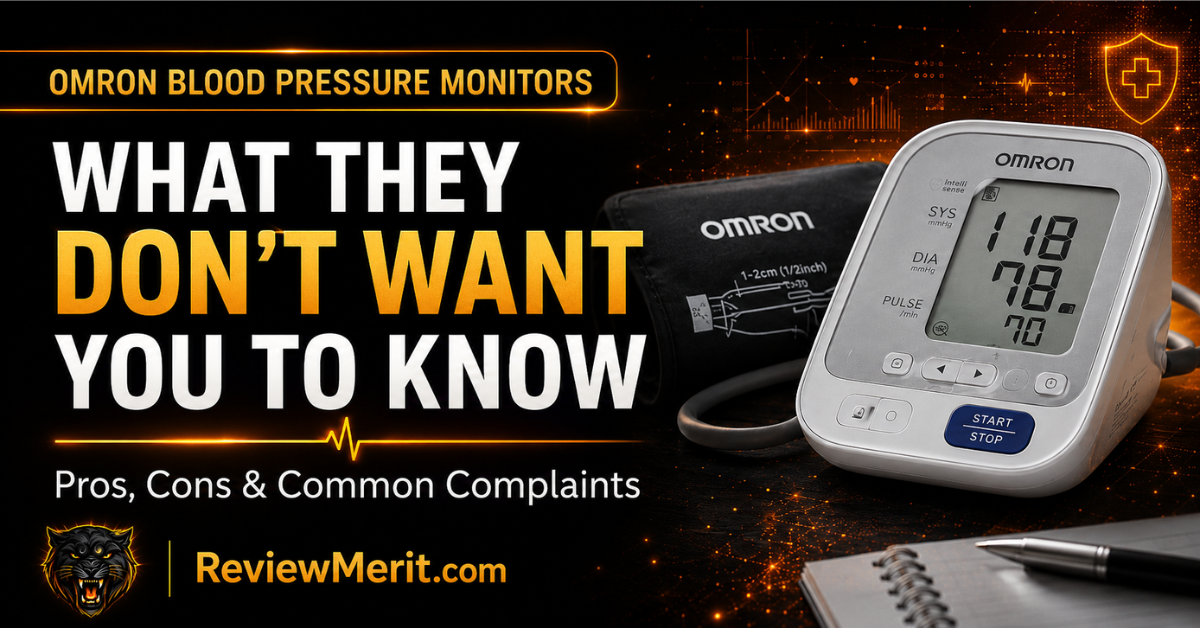
Omron blood pressure monitors are some of the most recognizable home monitors on the market, and that familiarity is a big reason so many people trust the brand for routine at-home tracking. But a well-known name does not automatically mean every Omron model is the best choice for every user, especially when factors like cuff fit, reading consistency, app connectivity, and overall ease of use can vary from one person to the next.
That is why we wanted to take a closer look at both sides. Omron has a long history in home blood pressure monitoring and remains a dependable choice for many users, but there are also recurring complaints worth understanding before you buy. At the same time, newer alternatives such as the Oxiline Pressure XS Pro and Conneqt Pulse bring different features and monitoring approaches that may make more sense depending on what you want from a home blood pressure monitor.
In this post, we’ll look at what Omron does well, where some users run into frustration, and how it compares with newer alternatives so you can make a more informed decision before choosing your next monitor.
This post contains affiliate links. If you purchase through them, we may earn a small commission at no extra cost to you.

Table of Contents
What Interested Us About Omron Blood Pressure Monitors
Omron has been one of the most recognizable names in home blood pressure monitoring for years, which makes the brand a natural starting point for shoppers looking for a monitor they can use at home. That familiarity matters, but we were more interested in how Omron holds up once you look beyond the name itself. A blood pressure monitor has to be easy to use consistently, comfortable enough for regular testing, and dependable enough that users can feel confident in the readings they are seeing.
That is where the comparison becomes more interesting. Omron still offers plenty of appeal for people who want a traditional home monitor with straightforward controls and a familiar setup, but newer alternatives are putting more emphasis on connected tracking, app integration, and additional cardiovascular data. Depending on what you want from a monitor, those differences can matter just as much as brand recognition.
Our goal here is not to dismiss Omron or treat newer technology as automatically better. We want to look at where Omron continues to perform well, where users report frustrations, and whether alternatives such as the Oxiline Pressure XS Pro or Conneqt Pulse offer advantages that may make them a better fit for certain users.
Omron Blood Pressure Monitors: Features and Ease of Use
Omron blood pressure monitors are generally designed around straightforward home use, which remains one of the brand’s biggest strengths. Many models include automatic inflation, large digital displays, built-in memory, irregular heartbeat detection, and simple one-touch controls that make it easy to take a reading without a complicated setup process. For users who want a familiar upper-arm monitor they can keep at home and use regularly, that simplicity is a major part of Omron’s appeal.
Ease of use still depends on more than pressing a button. Proper cuff placement, arm support, sitting position, and resting before a reading all matter, and even a good monitor can produce inconsistent results if those basics are overlooked. Omron’s design is generally simple enough for routine use, but cuff fit can vary from one user to another, and some people may find certain models easier to position comfortably than others.
The brand also offers connected models with app-based tracking, which can be useful for users who want to store readings over time instead of writing them down manually. That added functionality can make long-term monitoring easier, although some users report occasional frustrations with pairing, syncing, or app setup. Overall, Omron still does a good job of keeping the core monitoring process simple, but the experience can vary depending on the specific model and how much connected functionality you expect from it.
Common User Complaints About Omron Blood Pressure Monitors
Even with Omron’s strong reputation, user feedback is not universally positive. The most common complaints tend to center around reading consistency, cuff fit, app connectivity, and customer support, all of which can become more important for someone who plans to monitor blood pressure regularly rather than only checking it occasionally.
Reading consistency is one of the concerns that comes up most often. Some users report getting noticeably different results within a short period of time, which can make it harder to feel confident in the numbers. Some variation is normal with any home blood pressure monitor, especially when posture, cuff placement, movement, stress, or timing changes from one reading to the next. Still, when users see repeated differences they cannot easily explain, it can create frustration and uncertainty about whether the monitor is giving them a reliable picture.
Cuff fit is another area that can affect the overall experience. A cuff that feels awkward, difficult to position, too tight, or too loose can make repeated testing less comfortable and may also contribute to inconsistent readings. This is especially important for users whose arm size falls near the upper or lower limits of a standard cuff range, where fit can become more noticeable during regular use.
Connected features can also be a mixed experience. Some Omron models offer app syncing and digital tracking, but users occasionally report pairing problems, delayed syncing, or setup steps that feel more complicated than expected. Customer support receives similarly mixed feedback, with some users satisfied and others frustrated when they need help resolving device or connectivity issues.
None of these complaints mean Omron is a poor choice across the board, but they are worth considering before buying, particularly if you want a monitor you expect to use frequently and rely on over the long term.
Omron Alternatives Worth Comparing
For shoppers who like the familiarity of a traditional upper-arm blood pressure monitor but want a more modern tracking experience, the Oxiline Pressure XS Pro is one of the more natural alternatives to compare with Omron. It keeps the basic monitoring process simple while adding features such as app-based tracking, memory storage, and a large display that can make it easier to follow readings over time without turning the process into something complicated.
One of the biggest differences comes down to how the monitor fits into a regular routine. Omron remains a strong choice for users who want a familiar brand and straightforward home monitoring, while Oxiline puts more emphasis on convenience, connected tracking, and a smoother day-to-day experience. Cuff comfort and positioning also matter here because a monitor that is easier to fit correctly is easier to use consistently, and consistent technique is an important part of getting useful home readings.
The Pressure XS Pro is not automatically the better choice for everyone, but it gives shoppers a legitimate alternative if app tracking, cuff comfort, warranty support, and overall usability are high priorities. If you are also considering a more advanced monitor that goes beyond standard brachial blood pressure readings, our Conneqt Pulse Review takes a closer look at how that device approaches home cardiovascular monitoring.
Which Blood Pressure Monitor Is Right for You?
Omron remains a solid choice for shoppers who want a familiar, straightforward home blood pressure monitor without paying for features they may never use. Its long-standing reputation, simple controls, and wide range of models make it an easy starting point, especially for users who mainly want dependable upper-arm readings and basic tracking.
Oxiline and Conneqt become more interesting when you want something beyond that traditional experience. The Oxiline Pressure XS Pro stays close to the conventional upper-arm format while emphasizing connected tracking and everyday usability, while the Conneqt Pulse goes considerably further by providing additional cardiovascular measurements such as central blood pressure and arterial stiffness.
There is no reason to dismiss Omron simply because newer alternatives exist, but there is also no reason to choose it based on name recognition alone. Compare the features you will actually use, the type of information you want to track, and how each monitor fits into your routine.
ReviewMerit Verdict

Omron remains a solid choice for straightforward home blood pressure monitoring, especially for users who value a familiar brand, simple operation, and a traditional upper-arm monitoring experience. There is nothing inherently wrong with choosing Omron, and for many people, it will provide exactly the kind of basic home monitoring they need without adding features they may never use.
Where Omron loses some of its advantage is when you start comparing it with newer alternatives. The Oxiline Pressure XS Pro offers a more modern take on the traditional blood pressure monitor with stronger emphasis on connected tracking and everyday usability, while the Conneqt Pulse goes further by providing additional cardiovascular measurements such as central blood pressure and arterial stiffness.
Our verdict is that Omron is still a good blood pressure monitor, but it is no longer the automatic choice simply because of the name on the box. If you want straightforward blood pressure monitoring, Omron remains easy to recommend. If you want a more connected traditional monitor, Oxiline deserves serious consideration, and if you want deeper cardiovascular insights beyond a standard blood pressure reading, Conneqt is the more advanced option.
Compare Omron With Oxiline and Conneqt
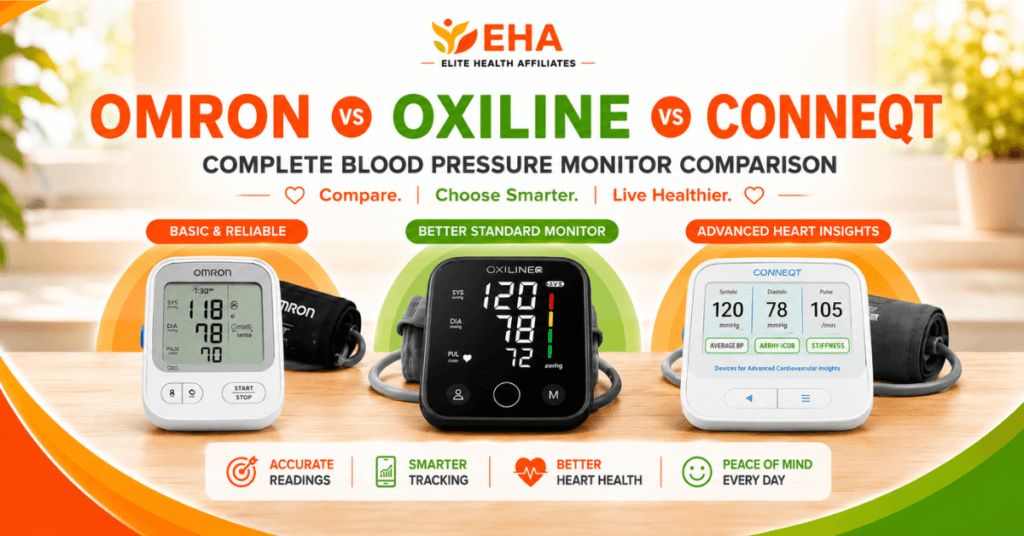
See how these home blood pressure monitors compare before you decide
Explore More Blood Pressure Monitor Guides
Choosing the right blood pressure monitor often comes down to more than comparing a few specifications. Accuracy, cuff fit, tracking features, ease of use, and the type of information you want to follow over time can all influence which monitor makes the most sense for your routine.
If you want to keep comparing your options, visit our Blood Pressure Monitor Guides for more reviews, comparisons, and guides covering home blood pressure monitoring and related devices.
Hey Mark,
I wanted to drop you a quick note. I purchase an Oxiline Pressure X Pro in July 2023. I didn’t really start using it regularly until March 2025 because this past January I had some unusually high blood pressure readings when I went to my doctor for my annual checkup. Anyway, I went to back to my primary care physician today to followup and see where my blood pressure is, and the reading I had in my doctor’s office today were significantly higher than the readings my Pressure X Pro were giving me.
I called Oxiline to share this with a sales person, and without any hesitancy the sales person created a replacement order and is sending me a new Pressure XS Pro. In a world where customer service is sometimes a headache–dealing with Oxiline was delightful.
Bobby
That’s awesome to hear, Bobby! I’m obviously a huge fan of Oxiline too, and stories like yours really help others see what kind of company they are. I think you’ll love the upgrade to the Pressure XS Pro—keep us posted on how it works out!