

Affiliate marketing for beginners can feel confusing because there is no shortage of people promising easy money, passive income, and overnight success. The real process is much simpler—and much more realistic. You recommend useful products or services, connect readers with those recommendations through tracked affiliate links, and earn a commission when someone completes a qualifying purchase.
Getting started the right way means doing more than signing up for a few affiliate programs and placing links wherever they fit. You need a clear niche, helpful content, a reliable way to reach the right audience, and enough patience to build trust and traffic over time. The tools matter, but understanding how the entire process works matters even more.
In this guide, we’ll show you how to learn affiliate marketing step by step, what beginners actually need, how websites and content generate commissions, and which common mistakes can slow down progress. We’ll also look at the role structured affiliate marketing training can play for beginners who want a clearer path instead of trying to piece everything together from random advice.
This post contains affiliate links. If you purchase through them, we may earn a small commission at no extra cost to you.

Table of Contents
What Is Affiliate Marketing?
Affiliate marketing is a business model where you earn a commission for recommending another company’s product or service. You do not create the product, manage inventory, process payments, ship orders, or handle customer service. Your role is to connect the right audience with a useful solution and make that recommendation through a tracked affiliate link.
When someone clicks that link and completes a qualifying purchase or action, the company can identify that the referral came from your website, video, email, or social content. You then receive either a percentage of the sale or a fixed commission based on the terms of that affiliate program.
The model itself is simple, but learning affiliate marketing successfully means understanding that the link is only one small part of the process. The strongest affiliate businesses are built around useful content, honest recommendations, and an audience that trusts the person or website making those recommendations. The goal is not to place links everywhere—it is to create enough value that the recommendation feels like the natural next step.
How Affiliate Marketing Works Step by Step
The process usually begins by choosing a niche, which is the main topic your website or business will focus on. A niche could center on home fitness, pet care, travel, technology, healthy living, or nearly any subject where people regularly search for information and purchase related products or services. The goal is not to find a magical topic with no competition. It is to choose an area where you can consistently create useful content for a specific audience.
From there, you create content around the questions, problems, and buying decisions people are already researching. That content may include product reviews, comparisons, tutorials, buying guides, or articles that solve a specific problem. When a product or service genuinely helps answer that need, you can include a tracked affiliate link that gives the reader a natural way to learn more or make a purchase.
Traffic is what connects that content with potential buyers. Visitors may find your website through Google, Bing, YouTube, social media, email, or other channels, and each source can play a different role in growing an affiliate business. When useful content reaches someone who is already looking for an answer or solution, the affiliate recommendation becomes part of the decision-making process rather than an intrusive sales pitch.
That basic relationship between content, traffic, trust, and relevant recommendations is one of the most important affiliate marketing basics to understand.
What Beginners Need to Start Affiliate Marketing
Beginners need a clear topic, somewhere to publish content, a reliable learning process, and realistic expectations. A website is one of the most practical foundations because it gives you control over your brand, articles, affiliate links, and long-term audience instead of depending entirely on a third-party platform. You do not need an elaborate setup on day one, but you do need a place where your content can grow into something you control.
You also need to learn the basics of keyword research, content creation, search intent, and how to choose products that genuinely fit the reader’s needs. Expensive tools are not required when you are starting out, but having a structured learning process can prevent months of wasted effort jumping between strategies that were never designed to work together.
Wealthy Affiliate is one option for beginners who want training, website tools, research features, hosting, and community support in one place. For a broader look at how we’ve used the platform while building real affiliate websites, read our complete Wealthy Affiliate Guide.

Do You Need a Website for Affiliate Marketing?
You do not technically need a website to participate in affiliate marketing, but for most beginners, a website provides one of the strongest long-term foundations. Social media accounts, video platforms, and email lists can all support an affiliate business, but those channels are still controlled by outside companies that can change their rules, limit reach, or alter how easily your audience sees your content.
A website gives you more control over your content, branding, affiliate links, and overall strategy. It also gives useful articles the opportunity to attract visitors repeatedly through search engines instead of disappearing quickly in a social media feed. Over time, that growing collection of content can become a business asset you continue improving, expanding, and monetizing.
Beginners do not need an elaborate website with dozens of pages before they start. A clear niche, a professional layout, and a small group of genuinely helpful articles are enough to begin building momentum. The goal is not to make everything perfect immediately. It is to create a reliable home for your content and improve it as you learn.
How Content, Traffic, and Affiliate Links Work Together
Affiliate commissions are usually the final result of a much longer process. First, someone searches for information, discovers your content, and decides whether your answer is useful. Only after you have helped solve part of their problem does an affiliate recommendation become relevant.
That is why content should come before links. A strong review explains who a product is for, what it does well, where it falls short, and whether it is worth buying. A comparison helps readers choose between realistic options. A tutorial may show someone how to solve a problem and recommend a useful tool along the way. The recommendation works best when it supports the content rather than becoming the entire reason the content exists.
Traffic then brings the right readers to that content. Search engines, YouTube, social media, email, and referrals can all contribute, but the most valuable traffic often comes from people already looking for an answer, solution, or purchase recommendation. When the content matches that intent, the affiliate link becomes the natural next step in the reader’s decision instead of an intrusive sales pitch.
How to Choose Your First Affiliate Marketing Niche
Your niche is the main subject your website or content will focus on. Beginners often assume they need to find a secret topic with little or no competition, but nearly every profitable market already has established websites and creators. A better goal is to choose a subject where people have recurring questions, genuine problems, and products or services they regularly research and purchase.
Personal experience can help, but passion alone is not enough. You should also consider whether the topic gives you enough room to create reviews, comparisons, tutorials, buying guides, and problem-solving content over time. A niche that supports only a handful of useful articles can become difficult to grow, while one with too many unrelated directions can make it harder to build a clear identity.
Avoid choosing something so broad that your content lacks focus or so narrow that you quickly run out of meaningful ideas. Start with a defined audience, problem, or group of related needs, then expand naturally as the website gains content, search visibility, and authority.

Beginners who want a more structured way to research a niche, build a website, and plan their first articles can learn more in our guide explaining What Is Wealthy Affiliate? including how the platform brings training, website tools, research features, hosting, and support together in one place.
How to Find Affiliate Programs to Join
Once you have chosen a niche and started creating useful content, the next step is finding relevant products or services to recommend. Some companies manage their own affiliate programs, while others use larger affiliate networks that connect publishers with multiple brands through one account. You can also find opportunities by searching directly for companies in your niche and checking whether they offer an affiliate or partner program.
Beginners should focus on relevance before commission size. A high-paying offer is not valuable if it does not fit the reader’s needs, match the content, or come from a company you would feel comfortable recommending. The strongest affiliate partnerships usually involve products you understand, companies you trust, and offers that solve the same problems your audience is already researching.
You also do not need dozens of affiliate programs immediately. A small group of dependable partners is easier to manage while you learn which articles attract traffic, which links get clicked, and which recommendations actually convert. As your website grows, your analytics can guide you toward additional brands and programs that fit naturally instead of filling the site with random offers.
Common Affiliate Marketing Mistakes Beginners Should Avoid
One of the biggest mistakes is choosing a niche only because someone claims it is profitable. Without enough interest, experience, or curiosity to keep researching the subject, beginners often lose motivation before the website has time to grow. A niche still needs commercial potential, but it also has to give you enough reasons to keep creating useful content when the early results are slow.
Another common mistake is concentrating on affiliate links before creating genuinely useful content. Readers are unlikely to trust a recommendation when an article feels designed only to generate a click. Helpful explanations, honest drawbacks, clear comparisons, and practical answers should come first. The affiliate link should support the content, not become the entire purpose of it.
Beginners also lose time by constantly changing niches, buying unnecessary tools, chasing every new strategy, or expecting each article to rank immediately. A clear plan followed consistently is usually more valuable than repeatedly starting over. Structured platforms such as Wealthy Affiliate can reduce some of that confusion, but the training only helps if you stay focused long enough to apply it, evaluate the results, and make better decisions based on what actually happens.
We have made some of these mistakes ourselves. Building real affiliate websites has taught us that it is easy to spend too much time testing tools, changing directions, or chasing ideas that look promising before the data proves they deserve more attention. Some of our most useful lessons have come from updating older content, watching what actually attracts traffic and affiliate clicks, and learning when to improve a strategy rather than abandon it too quickly.
How Long Does Affiliate Marketing Take to Work?
Affiliate marketing is a long-term business model, not an instant-income opportunity. New websites need time to publish enough useful content, become visible in search results, attract the right visitors, and earn trust. Some beginners may generate an early commission, but dependable traffic and consistent income usually take much longer to develop.
Progress also depends on how frequently you publish, how competitive your niche is, how well your content matches search intent, and whether you continue improving older articles as you learn. Two beginners can start at the same time and see very different results because their strategies, available time, niche choices, and content quality are not identical.
We have seen that uneven progress firsthand while building and managing our own affiliate websites. Rankings can improve, disappear, and return; impressions can rise before clicks follow; and an article that seems quiet for months can eventually become one of the stronger pages on a site. That experience is one reason we do not judge an affiliate website by a single week, ranking check, or early commission total.
The most productive approach is to measure progress in stages instead of judging everything by income alone. Published articles, indexing, growing impressions, improving rankings, increasing traffic, affiliate clicks, and eventually conversions all show that the foundation is developing. Looking at those signals makes it easier to see whether the business is moving forward even before the income becomes consistent.

Our guide answering Does Wealthy Affiliate Actually Work? takes a closer look at realistic expectations, the time involved, and what members must consistently do before they can expect meaningful results.
How Much Money Can Beginners Make With Affiliate Marketing?
Affiliate marketing income varies widely because there is no fixed salary, guaranteed commission, or standard timeline. A beginner may earn nothing during the early months while building content and traffic, then receive a first commission once the right reader finds a relevant recommendation. That first sale matters, but it does not automatically mean the business has become consistent.
Income potential depends on the niche, traffic quality, commission rates, product prices, conversion rates, and how well the content helps people make decisions. A website with fewer highly targeted visitors can sometimes earn more than one with much larger but less relevant traffic because the audience arrives closer to making a purchase. That is why traffic quality usually matters more than traffic volume alone.
The better goal is to build toward consistent progress rather than chase a specific monthly figure immediately. Your first ranking, first affiliate click, first commission, and first article that attracts steady traffic all show that the process is beginning to work. Larger income becomes possible as those individual wins accumulate across a growing library of useful content and stronger-performing recommendations.
Is Affiliate Marketing Legit?
Yes, affiliate marketing is a legitimate performance-based business model used by retailers, software companies, travel brands, service providers, and businesses across nearly every major industry. Companies pay affiliates because a successful recommendation can bring them a customer they may not have reached otherwise.
The business model becomes questionable when people rely on misleading claims, dishonest reviews, spam, fake urgency, or unrealistic income promises. Ethical affiliate marketers disclose their relationships, recommend products that genuinely fit the reader’s needs, explain meaningful drawbacks, and focus on helping people make better decisions instead of pushing every available offer.
Legitimate does not mean effortless. Affiliate marketing still requires research, content creation, audience building, testing, and consistent improvement over time. Beginners should be cautious of anyone promising guaranteed rankings, instant commissions, or truly passive income without explaining the work required to build trust, visibility, and traffic.
How Beginners Can Learn Affiliate Marketing
Beginners can learn affiliate marketing independently, but the sheer amount of conflicting advice online can make it difficult to know what to do first. One source may recommend social media, another may insist on paid advertising, and another may push expensive tools before the beginner has even chosen a niche. Free videos, blogs, affiliate marketing courses, and online communities can all be useful, but the challenge is knowing which advice belongs together and which strategies are designed for completely different business models.
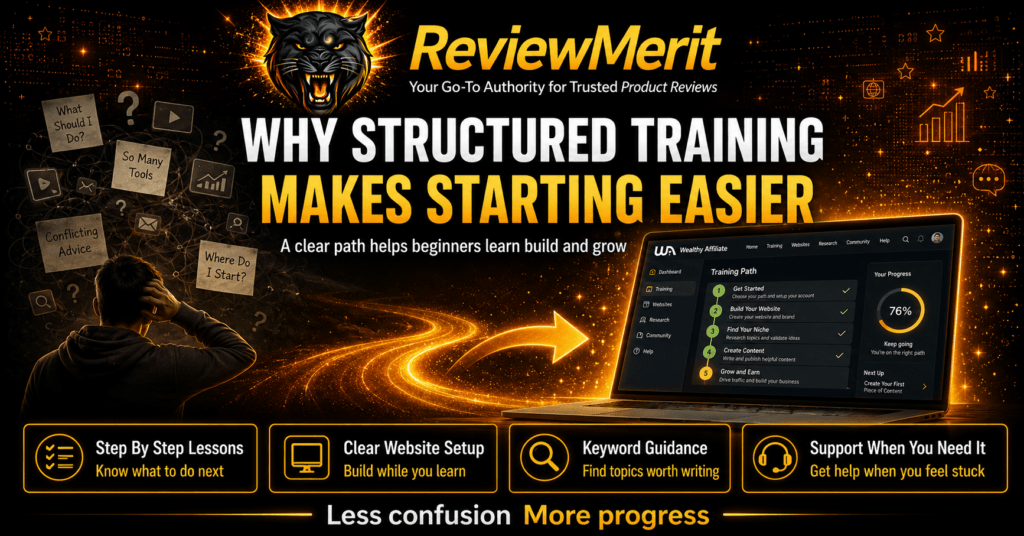
Structured affiliate marketing training creates an order for the process. Instead of trying everything at once, beginners can learn the basics of choosing a topic, building a website, researching content ideas, understanding search intent, attracting visitors, and adding affiliate recommendations when they genuinely fit. That sequence makes progress easier to evaluate and reduces the time lost bouncing between unrelated strategies.
Wealthy Affiliate is one option for beginners who prefer that kind of structured learning environment. It combines affiliate marketing training with website tools, hosting, research features, and community support in one platform. It does not eliminate the work, but it can give beginners a clearer path while they learn affiliate marketing by actually building something.
Readers who want to look more closely at the platform’s reputation, business model, and common concerns can read our detailed guide answering one of the bigger questions: Is Wealthy Affiliate a Scam?
How to Start Affiliate Marketing the Right Way
The right way to start affiliate marketing is by building a foundation before worrying about commissions. Choose one focused niche, identify the audience you want to help, and learn what questions, problems, and buying decisions they are already researching. That gives your website a clear purpose and makes it much easier to plan content that attracts the right visitors instead of publishing random articles and hoping something works.
Next, create a simple website and begin publishing useful content consistently. Start with informational guides, problem-solving articles, product reviews, and comparisons that genuinely help readers make decisions. You do not need hundreds of articles before you can make progress, but each piece of content should strengthen the same overall topic and give your audience another reason to trust the site.
Affiliate programs should come after you understand what your readers actually need. Join relevant companies, add affiliate links only where they improve the content, and monitor which topics attract impressions, traffic, clicks, and eventually conversions. Building in this order keeps the website focused on helping the reader first and prevents it from becoming a collection of disconnected promotions with little long-term value.
Can You Start Affiliate Marketing for Free?
You can begin learning affiliate marketing without spending much money, but building a serious long-term business usually involves at least a few basic expenses. A custom domain, dependable website hosting, and access to useful research or training tools can provide a more professional and stable foundation. Free resources can help you learn the basics, but eventually most beginners need a reliable place to publish and grow their content.
Free social media accounts and website platforms may be useful for experimenting, but they often come with restrictions. You may have limited control over branding, monetization, website features, affiliate links, or whether your content remains available long term. Depending entirely on free platforms also means building your business on property controlled by another company, which can make it harder to create something you fully own and manage.
The better question is not whether every part can be free, but whether the tools you use help you make meaningful progress. Beginners should avoid buying every course, tool, or service recommended online, while also recognizing that reliable hosting, structured education, and useful research tools can save considerable time and frustration.
Our guide explaining How Free Affiliate Marketing Programs Can Leave Beginners Stuck examines what limited options often leave out.
Who Is Affiliate Marketing Best For?
Affiliate marketing works best for people who enjoy learning, researching, explaining ideas, and helping others make better decisions. You do not need to be a professional writer, marketer, or technical expert when you begin, but you should be willing to improve those skills gradually as your website and experience grow. Curiosity, patience, and the ability to keep learning usually matter more than having a perfect background.
It can also be a good fit for people who need flexibility. Content can be researched, written, and updated around a job, retirement, childcare, travel, or other responsibilities. There are no required office hours, but that freedom still requires enough discipline to keep working consistently when no manager is setting deadlines or telling you what to do next.
Affiliate marketing is not ideal for someone who needs immediate income or strongly dislikes creating and improving content. Early progress can be slow, and much of the work happens before meaningful commissions arrive. It is better suited to people who are comfortable building gradually, evaluating what works, and improving the business over time.

For parents who want to build an affiliate business around childcare, household responsibilities, and a flexible schedule, our Affiliate Marketing for Stay-at-Home Moms guide takes a closer look at the advantages, challenges, and realistic expectations involved.
Is Affiliate Marketing Worth It for Beginners?
Affiliate marketing can be worth it for beginners who want to build an online business gradually and are willing to learn skills that improve over time. The startup costs can be relatively manageable, there is no inventory to purchase, and you can build around a topic or audience that genuinely interests you. It also gives beginners the opportunity to develop useful skills in content creation, search, research, marketing, and website management along the way.
The tradeoff is that most of the work comes before the income. Beginners must research topics, publish useful content, improve older articles, learn which recommendations actually help readers, and give the website enough time to gain visibility. The business can become more valuable as the site grows, but that growth is usually gradual rather than immediate.
Affiliate marketing is most worthwhile when you view the website as a long-term asset instead of a collection of affiliate links. Every useful article can attract traffic, strengthen the site, support related content, and create another opportunity to earn commissions months or even years after it is published. For beginners with realistic expectations and the patience to keep improving, that long-term potential is what makes the model worth considering.
Affiliate Marketing for Beginners FAQ
Do beginners need experience to start affiliate marketing?
No. Beginners can learn website building, keyword research, content creation, and affiliate marketing gradually as they build. Curiosity, patience, and a willingness to keep improving are usually more important than starting with technical or marketing experience.
How much does it cost to begin?
The cost depends on how you choose to start. A basic website generally requires a domain and hosting, while training, keyword research, or other tools may add additional expenses. Beginners should focus on building a dependable foundation instead of paying for every course, service, or tool they encounter.
Can affiliate marketing become passive income?
Affiliate marketing can eventually produce income from older content that continues attracting visitors and generating commissions, but the business is not completely passive. Websites still need new content, updated information, technical maintenance, and adjustments as products, competitors, affiliate programs, and search engines change.
Can you do affiliate marketing part-time?
Yes. Many beginners build affiliate websites around work, family, retirement, or other responsibilities. A part-time schedule can work well, but progress usually depends more on consistent effort over time than occasional bursts of activity.
How many affiliate programs should a beginner join?
A beginner usually needs only a few highly relevant affiliate programs. Joining too many at once can create unnecessary complexity and encourage random promotions instead of focused recommendations that genuinely fit the audience and content.
Is Wealthy Affiliate required?
No. You can learn affiliate marketing and build an affiliate business without Wealthy Affiliate. Its value is bringing structured training, website tools, hosting, research features, and community support together in one place for beginners who prefer a more guided path.
ReviewMerit Verdict: Start Simple and Build With Purpose

Affiliate marketing for beginners does not need to be complicated. Choose a focused audience, build a straightforward website, publish content that answers real questions and solves real problems, and recommend products or services only when they genuinely help the reader move forward. The foundation matters far more than trying to force commissions before the website has earned traffic and trust.
The biggest advantage is that you are building something you control. Your articles, brand, experience, search visibility, and audience can all become more valuable over time as the site grows. The biggest challenge is remaining consistent during the stage when you are doing most of the work before the traffic and commissions provide much encouragement.
Our verdict is based on building and managing real affiliate websites ourselves, not simply studying how the business model is supposed to work. We have experienced the slow rankings, uneven traffic, content updates, affiliate clicks, occasional wins, and long stretches where progress is less obvious. Affiliate marketing remains a realistic online business model for patient beginners who are willing to learn, publish consistently, and improve based on real results.
Wealthy Affiliate is not the only way to get started, but it can be a practical option for people who want structured training, website tools, research features, hosting, and support connected inside one platform.
Ready to Learn Affiliate Marketing the Right Way?
Wealthy Affiliate gives beginners one place to learn the process, build a website, research content ideas, and get help when they run into questions along the way. Instead of piecing together disconnected advice from dozens of sources, the platform combines training, website tools, hosting, research features, and community support inside one system.
It does not remove the work or guarantee quick results. You still need to choose a niche, create useful content, attract the right visitors, and stay consistent long enough to learn what is working. What Wealthy Affiliate can do is give beginners a clearer structure for learning affiliate marketing while they build a real website and put those lessons into practice.

Ready to Stop Guessing and Start Building?
Start free and see whether the platform fits your goals
Keep Building Your Affiliate Marketing Knowledge
Starting an affiliate website is only the first step. Choosing better topics, understanding what readers are searching for, creating trustworthy recommendations, and improving content over time are what gradually turn a new website into a stronger online business. The more experience you gain, the easier it becomes to recognize which content attracts the right audience and which recommendations deserve more attention.
Explore our Affiliate Marketing section for more beginner guides, honest platform reviews, and practical strategies designed to help you keep learning, improve your approach, and build with realistic expectations.