
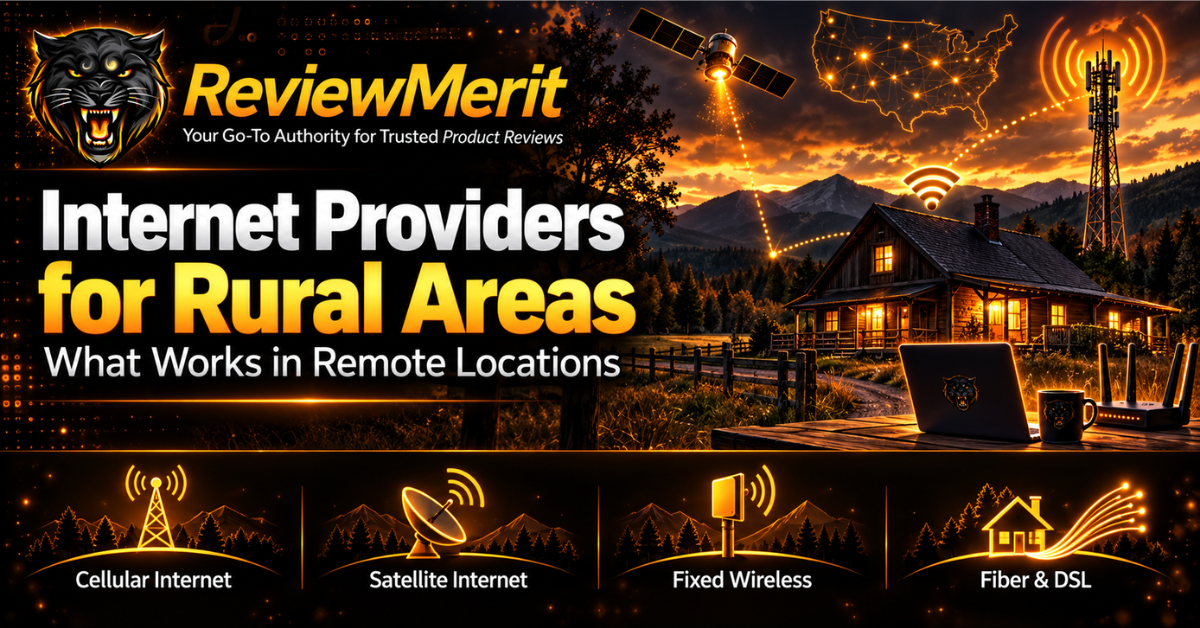
Finding reliable internet providers for rural areas is rarely as simple as comparing the fastest advertised speed. In remote locations, availability usually comes first. A provider can offer impressive speeds on paper, but that does not matter much if the service never reaches your address, requires equipment that does not fit your situation, or depends on infrastructure that is weak where you live.
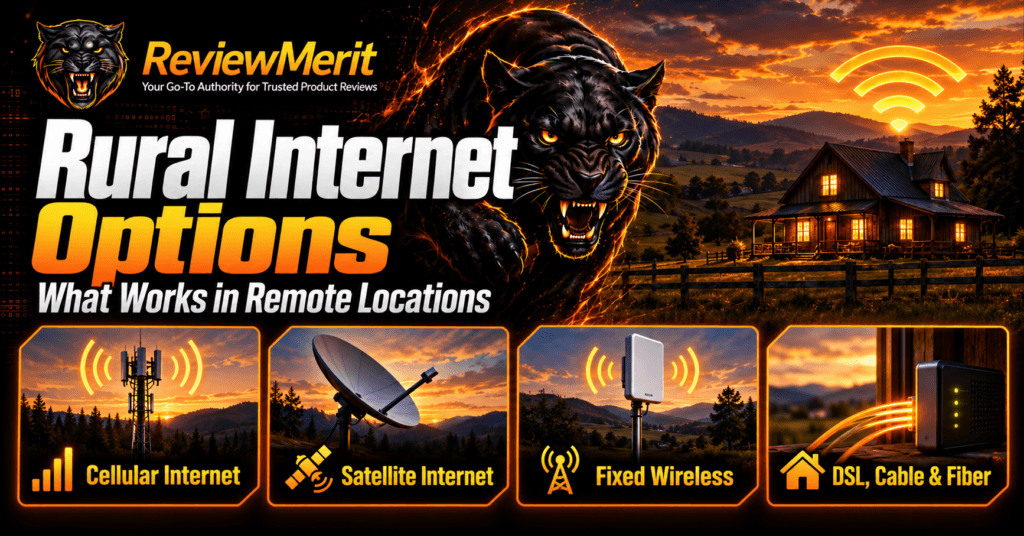
Today, rural households have more options than they did a few years ago. Cellular internet, satellite service, fixed wireless, DSL, cable, and even expanding fiber networks can all play a role depending on your location. The challenge is figuring out which type of connection makes the most sense for your home, cabin, farm, RV, or remote work setup.
In this guide, we break down the main internet providers for rural areas, explain where each option tends to work best, and show how services like HomeFi fit into the broader rural internet market. We will also compare the strengths and tradeoffs of cellular, satellite, fixed wireless, and wired options so you can narrow down the choices that are actually realistic for your location.
This post contains affiliate links. If you purchase through them, we may earn a small commission at no extra cost to you.
Check coverage, pricing, and available HomeFi internet plans.
Table of Contents
Cellular Internet for Rural Areas
Cellular internet has become one of the most practical options for rural households that have usable LTE or 5G coverage nearby. Instead of relying on buried cable lines or a satellite dish, cellular internet connects through existing mobile networks and delivers service through a router or hotspot. That can make setup much faster and more flexible, especially in locations where traditional providers have never expanded their infrastructure.
The biggest advantage is convenience. Cellular internet can often be installed without a technician, and some services are portable enough to use at a second property, cabin, campsite, or while traveling. The tradeoff is that performance depends heavily on local signal strength, tower distance, congestion, and terrain. A strong cellular signal can make wireless internet feel like one of the easiest rural solutions available, while weak coverage can make the same type of service much less reliable.
HomeFi fits into this category and is one of the wireless options we have looked at most closely. It is designed for rural homes, travelers, RV users, and remote workers who want internet without relying on a permanent wired connection.
For a full breakdown of how the service works, what we like about it, and what to consider before signing up, see our HomeFi Internet Guide and HomeFi Internet Review.
Satellite Internet
Satellite internet remains one of the most important options for extremely remote areas because it does not depend on nearby cable lines, fiber infrastructure, or cellular towers. Services such as Starlink, HughesNet, and Viasat can reach locations where other internet providers may have little or no presence at all, which is why satellite continues to play a major role in rural connectivity.
The tradeoff is that satellite internet usually comes with more equipment and a less portable setup than cellular service. Depending on the provider, users may need a dish, a clear view of the sky, and additional installation hardware. Weather, latency, congestion, equipment costs, and data policies can also affect the overall experience, although newer satellite technology has improved performance considerably compared with older systems.
For households deciding between satellite and cellular internet, the answer usually comes down to local coverage and how the connection will be used. If cellular coverage is strong, a service like HomeFi may offer more flexibility. If cellular coverage is weak or nonexistent, satellite may still be the more realistic option.
Our HomeFi vs Starlink comparison and Best Alternatives to Satellite Internet guide take a closer look at those differences.
Fixed Wireless Internet
Fixed wireless internet is another option that can work very well in rural areas when a local provider has towers within range. Instead of using satellites or buried cable lines, fixed wireless providers transmit internet service from a nearby tower to equipment installed at the customer’s property. This can provide a strong connection without the expense of extending cable or fiber across long rural distances.
The biggest limitation is availability. Fixed wireless service tends to be highly regional, and performance can depend on distance from the provider’s tower, surrounding terrain, trees, buildings, and whether the connection has a clear enough path. A household several miles away may have a completely different experience from another customer using the same provider.
When a strong local fixed wireless provider is available, it deserves serious consideration. It can offer a good balance between traditional wired broadband and more flexible wireless options. The important thing is to compare the actual service available at your address rather than assuming that every fixed wireless provider will perform the same way.
DSL, Cable, and Fiber in Rural Areas
Traditional wired internet should not be ignored simply because a home is located in a rural area. DSL is still available in many remote communities through existing telephone infrastructure, while cable service reaches some smaller towns and areas just outside larger population centers. Fiber is also expanding into more rural communities as broadband projects continue to bring newer infrastructure into places that historically had very limited choices.
These options can vary dramatically in quality. Older DSL connections may struggle with modern streaming, video calls, and multiple connected devices, while cable can provide much better speeds where the network is available. Fiber remains the strongest wired option in most cases because it can deliver high speeds, low latency, and consistent performance without relying on cellular signal strength or satellite visibility.
If dependable fiber reaches your address at a competitive price, it should usually be near the top of your list. The problem is that many rural households still cannot get it, which is why cellular, satellite, and fixed wireless options remain so important. The best rural internet choice starts with identifying what actually reaches your property before comparing speeds, pricing, and features.
Which Rural Internet Option Is Best for You?
The best rural internet option depends less on which provider has the biggest name and more on what is actually available where you live. A household just outside a small town with strong cellular coverage may have very different choices from someone living miles from the nearest tower. That is why availability should come first, followed by reliability, speed, price, installation requirements, and how much flexibility you need.
If you have good cellular coverage, a service like HomeFi can be one of the most convenient options because it avoids permanent installations and can work well for homes, cabins, RVs, and remote work. If you live in an extremely isolated location with weak or nonexistent cellular service, satellite internet may be the more practical choice. Fixed wireless can also be excellent when a strong local provider serves your area, while fiber should usually move to the top of the list whenever dependable service reaches your address at a reasonable price.
For travelers and people who split time between multiple locations, portability becomes much more important than it would be for a traditional household. Someone living full-time in an RV may value a cellular connection they can take with them, while a permanent rural homeowner may care more about consistency and maximum speed. There is no single rural internet solution that wins every situation, which is why matching the technology to your location and lifestyle matters more than chasing one universal “best” provider.
For a more direct comparison of the strongest choices, see our Best Rural Internet Provider guide, where we break down which options make the most sense for different rural users.
Why HomeFi Stands Out Among Wireless Options
HomeFi stands out because it focuses on the part of rural internet that traditional providers often struggle with most: flexibility. Instead of requiring buried lines, a fixed satellite installation, or a long wait for infrastructure to reach your property, HomeFi uses cellular connectivity through portable equipment that is designed to get users online with much less setup.
That approach can be especially attractive for rural homeowners who have decent cellular coverage but limited wired options. It also makes HomeFi interesting for RV owners, travelers, seasonal residents, and remote workers who may need internet in more than one location. The ability to avoid a permanent installation gives it a different kind of value than traditional home internet, even if it is not the right fit for every address.
The biggest limitation is the same one that applies to cellular internet in general: coverage matters. HomeFi can be a strong option where the signal is good, but it cannot overcome weak cellular infrastructure in an extremely remote location. That is why we recommend looking at HomeFi as one option within the broader rural internet market rather than assuming it will automatically outperform every alternative.
If you want the complete breakdown of the service, including how it works, whether it is legitimate, whether it is worth the cost, and how it compares with Starlink, our HomeFi Internet Guide brings all of those resources together in one place.
What to Check Before Choosing a Rural Internet Provider
Before signing up with any rural internet provider, start by checking whether the service is genuinely available at your address. Coverage maps and advertised service areas can be useful, but rural terrain, tower distance, trees, hills, and local infrastructure can create major differences even between nearby properties. The more specific the provider can be about your location, the better.
After coverage, look at the practical details that affect everyday use. Consider expected speeds, data limits, congestion policies, equipment costs, installation requirements, contracts, cancellation terms, portability, and whether the service offers a trial or return period. A provider with a slightly higher monthly price may still offer better overall value if it eliminates large equipment costs or restrictive contracts.
It is also important to match the service to the way your household actually uses the internet. A single person who mainly browses and checks email has very different needs from a family streaming on several devices while someone works from home and another person is gaming. Rural internet decisions are much easier when you evaluate real usage instead of focusing only on advertised maximum speeds.
If HomeFi is one of the services you are considering, our Is HomeFi Legit? and Is HomeFi Worth It? guides take a closer look at trust, value, expectations, and the questions worth asking before signing up.
Frequently Asked Questions About Internet Providers for Rural Areas
What Types of Internet Are Available in Rural Areas?
Rural internet can come from cellular networks, satellite providers, fixed wireless systems, DSL, cable, and fiber. The options available to you depend heavily on location, local infrastructure, cellular coverage, and whether regional providers serve your area.
What Is the Best Internet for Very Remote Areas?
In extremely remote locations with little or no cellular coverage, satellite internet may still be one of the most practical choices because it does not rely on nearby towers or wired infrastructure. Where strong cellular coverage exists, however, wireless services can offer a simpler and more flexible alternative.
Is Cellular Internet Good for Rural Homes?
It can be very good when the cellular signal is strong. Cellular internet can offer simple setup, portability, and useful everyday performance without requiring a technician or permanent installation. The main limitation is that speeds and reliability can vary with tower distance, congestion, terrain, and local signal strength.
Is Satellite Internet Still Worth Considering?
Yes. Satellite remains important for rural households located beyond the reach of dependable cellular, cable, fiber, or fixed wireless service. It may involve more equipment and installation than some wireless alternatives, but its ability to reach extremely remote areas remains a major advantage.
Should I Choose Fiber If It Is Available?
In most cases, dependable fiber at a competitive price should be one of the first options you consider. Fiber typically offers excellent speed, low latency, and consistent performance. Many rural households simply do not have access to it yet, which is why wireless and satellite alternatives remain necessary.
Is HomeFi Better Than Satellite Internet?
That depends on location and how you plan to use the service. HomeFi may be more attractive where cellular coverage is strong and portability matters, while satellite can be better in extremely remote locations with weak cellular service. Our HomeFi vs Starlink comparison looks more closely at how those two approaches differ.
ReviewMerit Verdict

There is no single internet provider that can honestly be called the best choice for every rural household. Rural connectivity is too dependent on geography, infrastructure, cellular coverage, and individual usage needs for one solution to win everywhere. The first question should always be what actually reaches your property reliably, and the second should be which of those available options best fits the way you use the internet.
Cellular services like HomeFi can be especially appealing where coverage is strong because they offer simple setup, portability, and an alternative to permanent wired or satellite installations. Satellite remains essential for many extremely remote locations, fixed wireless can be excellent when a strong local provider is available, and fiber is difficult to beat when rural expansion finally brings it to your address.
The good news is that rural households now have more choices than they once did. Instead of automatically accepting whichever provider happens to serve the area, you can compare different technologies and choose the one that offers the best combination of coverage, reliability, flexibility, and value for your situation.
Where to Try HomeFi
If HomeFi looks like the best fit for your location, the next step is to check the current plans, coverage, equipment, and pricing on the official website. Because cellular internet depends so heavily on local coverage, it is worth confirming availability before making any decision.
HomeFi is most compelling for rural households, RV owners, travelers, remote workers, and anyone who wants a more flexible alternative to traditional wired or satellite internet. If your area has strong cellular service, it may offer the combination of simplicity and portability that many rural users are looking for.
Explore More Rural Internet Options
If you are still comparing ways to get connected outside traditional service areas, visit our Rural Internet Options category for more reviews, comparisons, and guides covering HomeFi, satellite internet, wireless alternatives, and other solutions for rural connectivity.