
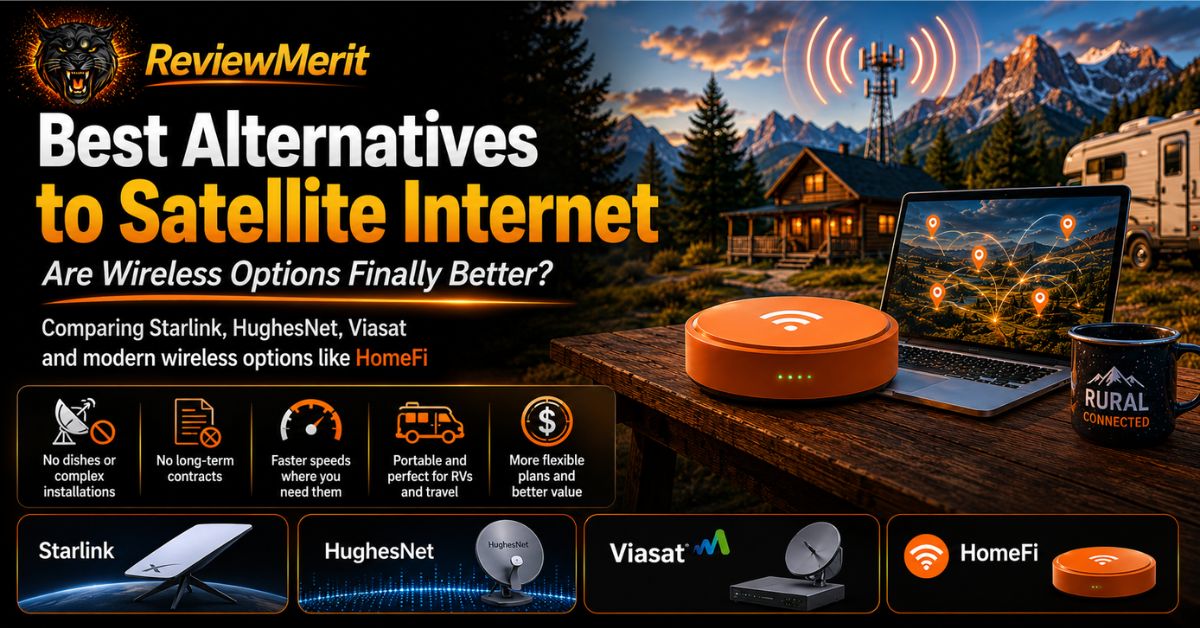
Short answer: For many rural users, the best alternatives to satellite internet are becoming far more flexible and practical than traditional satellite internet services. And honestly, that shift has been building for years.
For a long time, providers like Starlink, HughesNet, and Viasat dominated rural internet simply because many households had few other realistic options. If you lived outside major cities, satellite internet often felt like the only way to get connected.
But many rural users eventually became frustrated with:
- Expensive equipment
- Long-term contracts
- Slowdowns during peak usage
- Weather-related interruptions
- Complicated installations
- Limited portability and flexibility
That frustration is exactly why more users are now searching for the best alternatives to satellite internet for rural homes, RV travel, and remote living. And increasingly, modern wireless internet providers are entering that conversation.
Unlike traditional satellite systems that require rooftop dishes and fixed installations, many wireless internet services focus on:
- Simpler setup
- Greater portability
- Flexible plans without long-term contracts
- Fast startup
- Internet access for RV travel, remote work, and rural living
One company attracting growing attention in this space is HomeFi. Instead of relying on traditional satellite infrastructure, HomeFi uses wireless cellular connectivity to provide internet access for rural homes, travelers, RV users, and remote workers looking for more flexibility than traditional satellite providers often offer.
For many users, the biggest appeal is simple: No dishes. No complicated installation. No long-term contracts.
Are Wireless Internet Alternatives Actually Better Than Satellite Internet Now — Or Simply Different?
In this guide, we’ll break down:
- Why many users are moving away from satellite internet
- The biggest advantages and tradeoffs of wireless alternatives
- How services like HomeFi compare to providers like Starlink, HughesNet, and Viasat
- And whether modern wireless internet options may finally make more sense for rural users today
This post contains affiliate links. If you purchase through them, we may earn a small commission at no extra cost to you.

See why some rural users are considering wireless internet alternatives to traditional satellite providers
Table of Contents
Why Many Rural Users Are Looking Beyond Traditional Satellite Internet
For years, satellite internet providers filled an important gap for rural households with few other connectivity options. And to be fair, services like Starlink, HughesNet, and Viasat still play a major role in bringing internet access to remote areas where traditional cable and fiber infrastructure remain unavailable.
But many users are now starting to question whether traditional satellite internet is still the best long-term solution. One major reason is flexibility.
Traditional satellite systems often involve:
- Large rooftop equipment
- Professional installation
- Long-term contracts
- Higher upfront hardware costs
- Fixed-location limitations
For some users, especially RV travelers and people who relocate frequently, that setup can feel restrictive compared to newer wireless internet alternatives. Another growing frustration is performance consistency. While satellite internet technology has improved significantly over the years, some rural users still report issues involving:
- Slowdowns during peak usage
- Weather-related interruptions
- Latency concerns
- Data prioritization during congestion
- Variable speeds depending on location
That doesn’t mean satellite internet is “bad.” In many remote areas, it may still be one of the best or only realistic options available. But modern wireless internet providers are now creating more competition in a space that historically had very little of it.
Services like HomeFi are attracting attention because they focus on:
- Wireless portability
- Simpler setup
- No satellite dish installation
- Flexible service options
- Internet access for travel, RV life, and rural living
And for some users, that flexibility alone may feel like a major upgrade compared to older satellite internet systems.
If you’re still exploring broader internet options beyond satellite providers alone, our Internet Providers for Rural Areas guide explores several internet solutions for rural homes, remote living, RV travel, and flexible wireless connectivity.
How Wireless Internet Alternatives Like HomeFi Work
One of the biggest differences between traditional satellite internet and modern wireless alternatives comes down to how the internet connection is actually delivered. Traditional satellite providers rely on orbiting satellites and rooftop dish equipment to transmit internet signals across long distances. Wireless internet alternatives work differently.
Instead of depending on satellite dishes, services like HomeFi use wireless cellular connectivity to provide internet access through nearby network infrastructure. For many users, this creates a much simpler setup experience. Rather than scheduling complicated installations or mounting large dishes outside the home, wireless internet systems often focus on:
- Portable hardware
- Fast startup
- Flexible placement
- Internet access across multiple locations
- Simpler setup for travel and RV use
That portability is one reason wireless alternatives have started gaining attention among:
- RV travelers
- Remote workers
- Campers
- Rural homeowners
- Users frustrated with fixed-location satellite systems
For example, HomeFi markets its service heavily around flexibility and portability rather than permanent infrastructure. And for some users, that may be a major advantage. Instead of feeling tied to a fixed satellite installation, wireless internet can offer a more adaptable experience for people living, working, or traveling across multiple locations. However, there’s also an important tradeoff users should understand:
Wireless internet performance depends heavily on local cellular coverage. That means overall speeds and reliability can vary depending on:
- Tower proximity
- Network congestion
- Terrain
- Weather
- Signal strength in your area
In other words, wireless alternatives may feel significantly better for some users — while others may still prefer the consistency of traditional satellite infrastructure depending on where they live.
Where Satellite Internet May Still Have the Advantage
While wireless internet alternatives are attracting growing attention, traditional satellite internet still offers important advantages in some situations. One of the biggest is availability. In extremely remote rural areas where cellular tower coverage is weak or inconsistent, satellite internet providers like Starlink, HughesNet, and Viasat may still provide more reliable connectivity options than wireless alternatives.
That’s because satellite systems are not dependent on nearby cellular towers in the same way wireless internet providers are. For some users living far outside populated areas, that broader geographic reach can still make satellite internet the more practical solution. Satellite internet may also appeal to users who:
- Need coverage in extremely isolated locations
- Have weak cellular reception
- Prefer permanent fixed-home internet setups
- Want internet access independent of local tower congestion
And while traditional satellite installations can feel more complicated, some users may still prefer the consistency of a dedicated home-based system once everything is fully installed. In other words, wireless internet alternatives are not necessarily replacing satellite internet everywhere.
Instead, many rural users are now gaining something they historically lacked: More choice.
For a broader breakdown of internet solutions for remote homes and rural living, our Best Internet for Rural Areas guide compares several popular internet options, including wireless, satellite, and flexible connectivity services.
Real-World Situations Where Wireless Internet Alternatives May Make More Sense
For many rural users, the decision often comes down to something very simple: What type of internet setup actually fits your real life? For example, someone living full-time in an extremely remote rural area with weak cellular coverage may still benefit more from traditional satellite internet providers like Starlink, HughesNet, or Viasat. But not every user has the same needs.
A family living just outside town may prioritize:
- Streaming
- Remote work
- Simple setup
- Flexible service without long-term contracts
An RV traveler may care far more about:
- Portability
- Travel flexibility
- Internet across multiple locations
- Avoiding large satellite installations
Someone working remotely from different locations throughout the year may simply want internet that feels easier to move and manage. That’s one reason wireless internet alternatives like HomeFi are starting to attract attention from users who want something less restrictive than traditional satellite systems. And honestly, for many people, the appeal isn’t necessarily about chasing the fastest speeds possible.
It’s about finding an internet solution that better matches:
- Their lifestyle
- Their travel habits
- Their location
- Their flexibility needs
- Their willingness to deal with complicated installations and contracts
That’s also why opinions about rural internet can vary so dramatically online. The “best” internet option for a stationary home in an isolated area may look very different from the best option for:
- RV travel
- Remote work
- Seasonal living
- Frequent relocation
- Users prioritizing convenience and flexibility
In other words, the growing interest in wireless internet alternatives isn’t just about technology. For many rural users, it’s about finding internet that finally fits the way they actually live.

Why Some Rural Users Feel Wireless Internet Alternatives Offer Better Value
For many rural users, the conversation is no longer just about monthly price alone. It’s about overall value. Traditional satellite internet providers like Starlink, HughesNet, and Viasat often involve:
- Equipment costs
- Large hardware setups
- Installation requirements
- Fixed-location limitations
- Long-term commitments depending on the provider
And for some users, those added layers can make rural internet feel more complicated and restrictive than it needs to be. That’s one reason services like HomeFi are starting to gain attention. Instead of focusing on large satellite infrastructure, HomeFi emphasizes:
- Portable wireless internet
- Simpler setup
- No rooftop dish installation
- Flexible service
- Internet access designed for mobility and modern lifestyles
For many users, that flexibility alone may feel like better overall value — even before comparing raw monthly pricing. And increasingly, some rural users simply prefer the idea of:
- Internet they can move
- Internet without permanent installations
- Service without long-term contracts
- Less complicated hardware
- Faster startup with fewer setup hassles
That doesn’t automatically make wireless internet cheaper in every situation. But for users prioritizing:
- Flexibility
- Convenience
- Portability
- Lower commitment
- Simpler setup
…services like HomeFi may start to feel like a much more practical long-term value compared to traditional satellite internet systems.
For users wanting a deeper breakdown of setup, features, flexibility, pricing structure, and overall performance, our HomeFi Internet Review explores the service in much greater detail.
Pros and Cons of Wireless Internet Alternatives
Like any rural internet solution, wireless internet alternatives come with both advantages and tradeoffs. And honestly, whether services like HomeFi feel “better” than traditional satellite internet often depends on your location, coverage, and lifestyle needs.
Pros
- Portable internet access for RV travel, remote work, and multiple locations
- No rooftop satellite dish installation
- Simpler setup compared to many traditional satellite systems
- Flexible service without long-term contracts
- Less restrictive for users who move frequently
- Modern wireless approach that may feel easier to manage
- Potentially lower overall commitment compared to fixed satellite infrastructure
Cons
- Performance depends heavily on local cellular coverage
- Not ideal for every extremely remote rural location
- Speeds and reliability may vary depending on congestion and signal strength
- Some users may still prefer permanent fixed-home internet setups
- Satellite providers may still offer stronger coverage in isolated areas
- Wireless internet performance can vary significantly by region
For many users, the biggest difference comes down to flexibility. Traditional satellite internet often focuses on fixed-home infrastructure, while wireless internet alternatives like HomeFi focus more on portability, mobility, and simplified internet access. And increasingly, that difference is exactly why many rural users are now exploring alternatives to satellite internet more seriously than ever before.
How Wireless Internet Alternatives Compare to Starlink, HughesNet, and Viasat
One reason many users are now exploring alternatives to satellite internet is because not all rural internet providers are designed for the same type of user. For example, Starlink has gained attention for bringing faster satellite internet speeds to many rural areas that previously had very limited options. But Starlink still relies on:
- Satellite dish equipment
- Fixed installation requirements
- Higher upfront hardware costs
- Permanent setup infrastructure
For users wanting a more portable or travel-friendly solution, services like HomeFi may feel far more flexible. Meanwhile, traditional providers like HughesNet and Viasat have long focused on delivering internet access to rural households through satellite-based systems. And while those providers still serve many remote areas successfully, some users eventually become frustrated with:
- Long-term contracts
- Data limitations
- Installation complexity
- Weather-related interruptions
- Higher equipment commitments
That’s one reason wireless internet alternatives are starting to attract more attention. Instead of focusing on permanent satellite infrastructure, services like HomeFi emphasize:
- Wireless portability
- Simpler setup
- Flexible service
- Internet for RV travel and remote work
- Connectivity across multiple locations
For some users, that may feel like a much more modern approach to rural internet access. At the same time, satellite internet providers may still have advantages in:
- Extremely remote areas
- Locations with weak cellular coverage
- Permanent fixed-home internet setups
If you’re still unsure whether the service is trustworthy, our Is HomeFi Legit? guide explores common concerns surrounding coverage, reliability, contracts, customer expectations, and real-world usability.
Frequently Asked Questions About Alternatives to Satellite Internet
Are wireless internet alternatives better than satellite internet?
For many users, wireless internet alternatives may offer more flexibility and simpler setup than traditional satellite internet systems. However, the best option still depends heavily on your location, cellular coverage, and internet needs.
Is HomeFi a satellite internet provider?
No, HomeFi uses wireless cellular connectivity rather than traditional satellite infrastructure. Instead of requiring rooftop satellite dishes, HomeFi focuses on portable wireless internet designed for rural homes, RV travel, remote work, and flexible internet access.
Can wireless internet replace satellite internet in rural areas?
In some rural areas, wireless internet alternatives may absolutely replace traditional satellite internet for certain users. However, extremely remote locations with weak cellular coverage may still benefit more from providers like Starlink, HughesNet, or Viasat.
What are the biggest advantages of wireless internet alternatives?
Many users are drawn to wireless internet because of portability, flexibility, and simpler setup. Services like HomeFi may appeal to users wanting internet without large satellite dishes, complicated installations, or long-term contracts.
Does wireless internet work well for RV travel?
For many RV travelers, wireless internet alternatives may feel much more practical than traditional satellite setups. Portable wireless internet can often be easier to move between locations without dealing with permanent installations tied to a single property.
Are satellite internet providers still worth considering?
Yes — especially in extremely remote areas with limited cellular coverage. Providers like Starlink, HughesNet, and Viasat still play an important role in delivering internet access to many rural households.
For users comparing overall value, flexibility, and long-term practicality, our Is HomeFi Worth It? article breaks down where HomeFi performs well — and where it may not be the perfect fit for every user.
ReviewMerit Verdict

For many rural users frustrated with traditional satellite internet, HomeFi may honestly feel like a much more modern and flexible solution.
That doesn’t mean providers like Starlink, HughesNet, and Viasat no longer serve an important purpose. In extremely remote areas with limited cellular coverage, satellite internet may still remain the best realistic option available. But for users wanting:
- Simpler setup
- Portable internet access
- No rooftop satellite dish
- Flexible service without long-term contracts
- Internet for RV travel, remote work, and modern lifestyles
…HomeFi clearly approaches rural internet very differently than traditional satellite providers. And honestly, that difference may matter far more than many people realize. Instead of building internet service around permanent hardware installations and fixed-home infrastructure, HomeFi focuses on flexibility and mobility — something many rural users have been wanting for years.
For some households, that may simply feel like a better fit for the way people actually live today. Of course, wireless internet still depends heavily on local cellular coverage, so results can vary significantly depending on your location. But for users frustrated with:
- Complicated installations
- Long-term commitments
- Large satellite equipment
- Fixed-location limitations
…HomeFi may finally offer one of the most realistic and practical alternatives to traditional satellite internet currently available.
Where To Try HomeFi
For users exploring alternatives to traditional satellite internet, HomeFi offers portable wireless internet with flexible service, no long-term contracts, cancel-anytime flexibility, and a simpler setup experience than many traditional satellite providers.

See current HomeFi plans and coverage options directly from the official website
Explore More Rural Internet Options
If you’re still comparing ways to get reliable internet outside traditional service areas, explore our Rural Internet Options for more reviews, comparisons, and guides covering HomeFi and other solutions for rural connectivity.